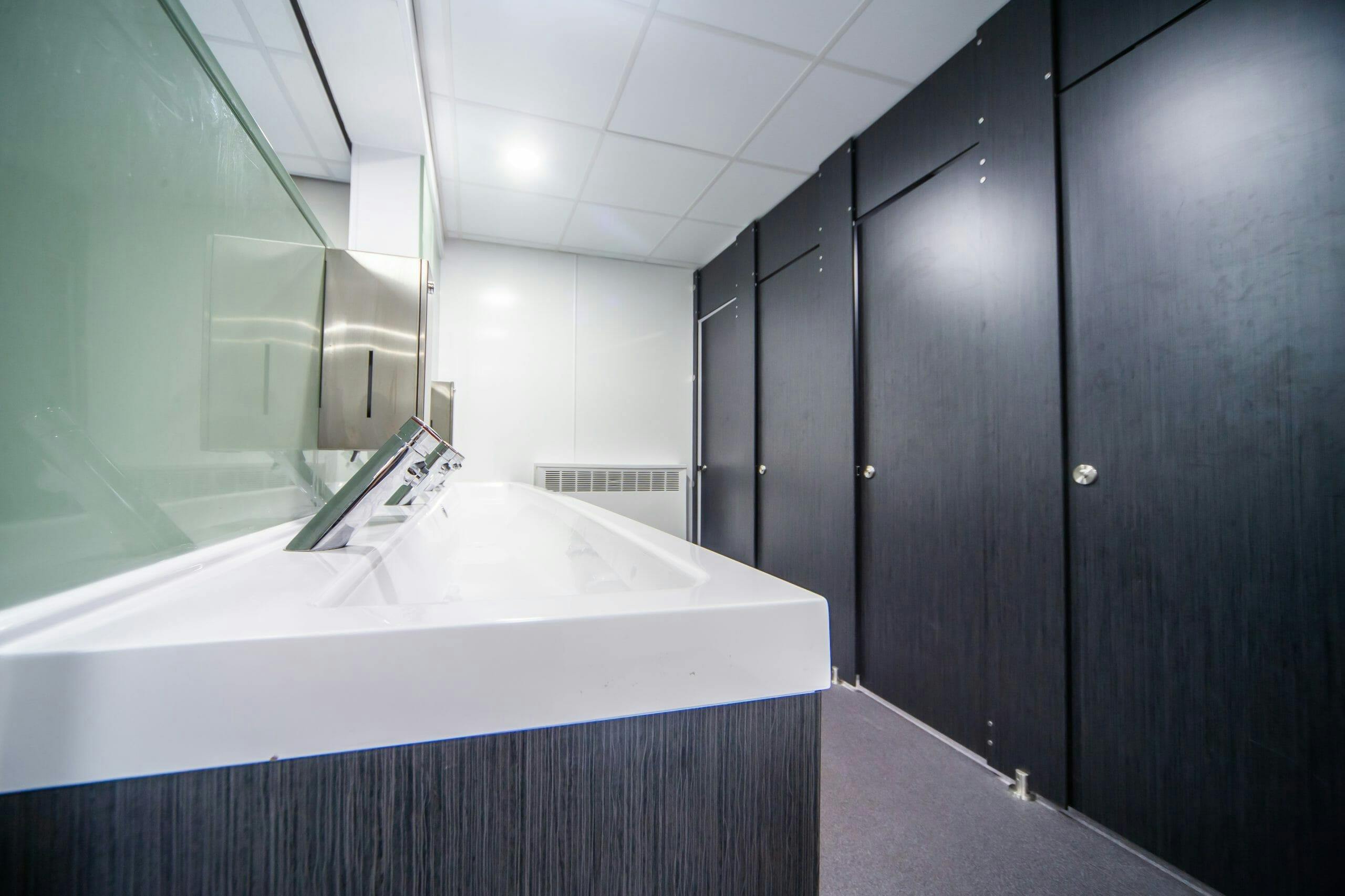
Like all areas of your building, over time maintenance will need to be carried out to your washroom to make sure the facility is up to scratch.
Undoubtedly, your washroom will be one of the most used areas of the property, regardless of whether your building belongs to a school, office, healthcare facility, restaurant or a another type of business.
If you’re not sure whether your provisions have had their day, here are 5 signs your washroom needs an upgrade to tell you more.
1. Maintenance Calls Are Becoming A Regular Occurrence

The occasional repair is inevitable in any commercial washroom. Cisterns wear out, seals fail and taps drip. But when the same fittings keep requiring attention, or when a single visit from a plumber has become a monthly fixture, the cost of reactive maintenance quickly starts to outweigh the cost of replacement.
Beyond the obvious, aspects such as the walls and floors can also degrade. If the issue presents a safety hazard (i.e. a floor tile that users are tripping over), a refurbishment will need to happen sooner rather than later.
If your maintenance log shows the same washroom appearing repeatedly, that is a reliable signal that a refurbishment will be more cost-effective than continuing to patch.
2. Non-Compliance With UK Disability Laws
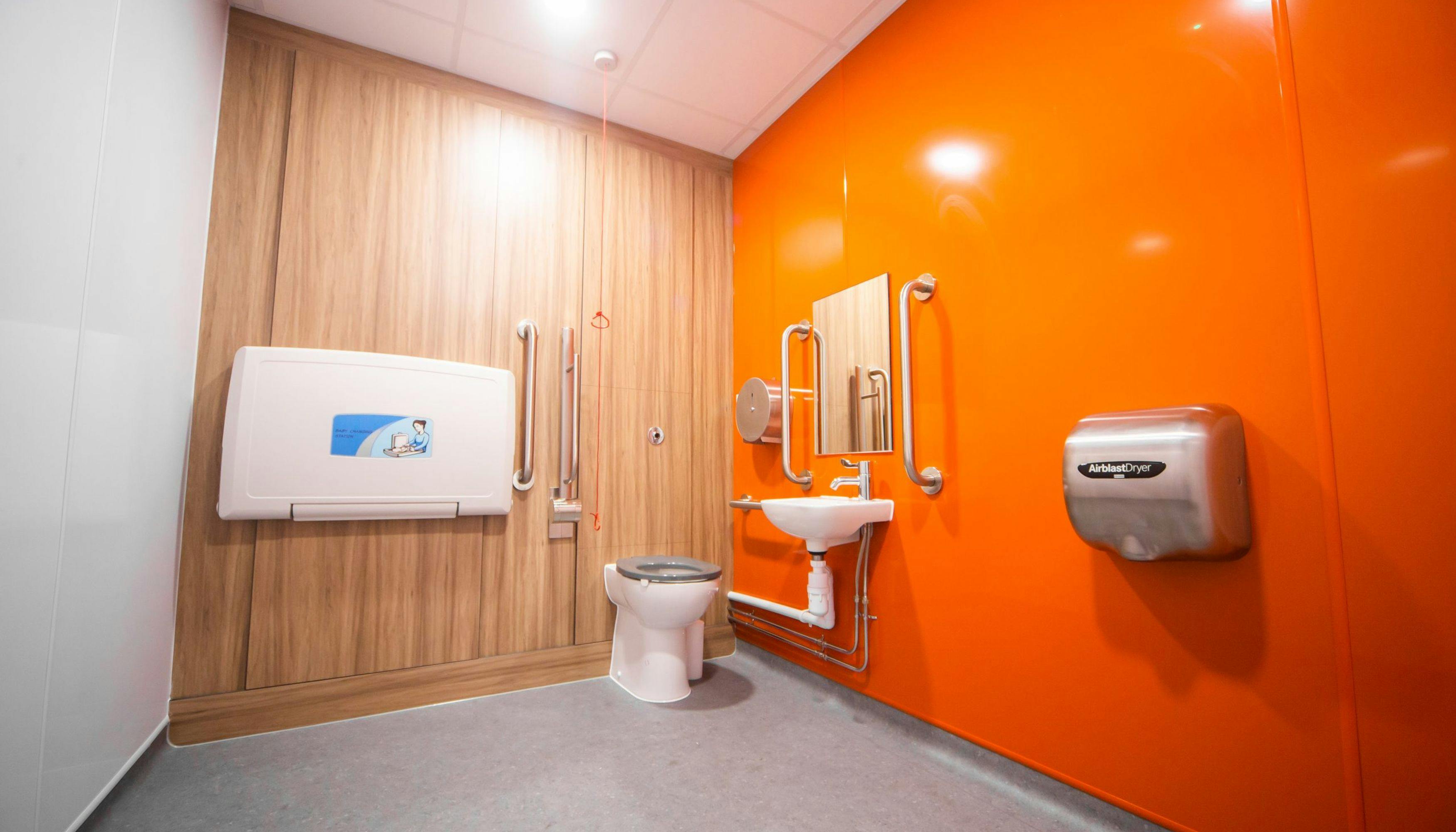
A lack of an accessible toilet can cause completely avoidable issues for those who need them most. If your building doesn’t have accessible washroom facilities, then changing this should be a top priority, especially if it’s a public building. Not only is a lack of accessible facilities highly frustrating for users, but it may even prevent some people from visiting your building at all.
For the vast majority of buildings, it’s possible to incorporate accessible washroom facilities. Every effort that can be taken to reduce this problem will contribute to a fairer society since going to the toilet is a human right, not a luxury.
Above: here’s one we made earlier! Accessible washrooms are one of the many services we provide our clients here at Inspired Washrooms.
3. Hygiene Is Becoming Difficult to Maintain

In settings where hygiene standards matter, such as schools, healthcare facilities, food preparation environments and hospitality venues, surfaces that cannot be kept clean are a compliance risk rather than just an appearance issue.
A refurbishment that replaces worn surfaces with modern materials specified for easy cleaning, including large-format tiles with minimal grout joints, solid-grade laminate cubicle panels and sensor taps that eliminate handle contact, makes the ongoing maintenance of hygiene standards considerably more manageable.
4. The Washroom Does Not Reflect The Standard of Your Organisation

Washrooms are often the space in a building that visitors form the strongest impression of. A reception area may be immaculate and a meeting room well-appointed, but if the washroom falls short, that is what people remember. The same applies internally: staff who use poor-quality facilities every day receive a clear signal about how the organisation values their working environment.
This is particularly relevant in sectors where client-facing facilities carry real weight, such as professional services, hospitality, retail and leisure, but it applies broadly. Research consistently shows that washroom quality is one of the leading factors in staff satisfaction with their workplace and that organisations with well-maintained facilities see lower rates of staff turnover attributable to the physical environment.
If your washroom was last refurbished more than ten years ago, the gap between its current condition and what staff and visitors now expect from a commercial facility is likely to be significant. The design standards, materials and fittings available today are a considerable step forward from what was typical a decade ago.
5. Water And Energy Consumption Are Higher Than They Should Be

Older commercial washroom fittings are almost always less water-efficient than their modern equivalents. Standard cisterns installed before the introduction of dual-flush requirements use six litres per flush as standard. Taps without flow regulators or aerators typically deliver nine to twelve litres per minute. In a high-footfall washroom used hundreds of times a day, the cumulative water consumption is substantial.
If your utility bills include a washroom-attributable element that has not been reviewed in years, the savings available from modern fittings are likely to be more significant than you might expect.
Find Out More
Interested in upgrading your washroom? Inspired washrooms install across the UK. We cover a range of different installation types and we’d be happy to advise on the best solution to suit your needs.
With 15 years of commercial washroom experience, we’re ready and waiting to help you with your project! Please get in touch or call us 0115 811 4242 to speak with our friendly team.