
When you are involved in the planning of a commercial bathroom installation or renovation, it’s easy to assume that everything is similar to the bathrooms found in residential properties.
In reality, when it comes to toilets or shower facilities intended for commercial use, these are actually known as commercial washrooms. The name is far from the only thing that’s different from the type of bathroom you might be familiar with at home.
Knowing the differences between commercial and residential bathrooms isn’t just a game of trivia. If you own a commercial premises or you work as a facilities manager, understanding what a commercial bathroom must have is essential for legal compliance as well as employee and guest satisfaction.
At Inspired Washrooms, we install washrooms in commercial buildings across the UK.
We’ve put together this post to outline everything that’s different between a commercial washroom and a residential bathroom installation to guide you.
What Is A Residential Bathroom?

As the name suggests, residential bathrooms are bathrooms which are found in residential dwellings such as houses, flats, apartments, bungalows and holiday homes.
Residential bathrooms are designed primarily for personal use. While building regulations still apply to residential bathrooms, they generally offer more freedom in terms of the overall look and design.
The fixtures and fittings of a bathroom found in a residential property are intended to be used by a limited number of people, i.e. the people who live in the property or visitors. However, in busier homes, it is increasingly common to have more than one bathroom installed, such as an ensuite or downstairs WC.
One of the first key differences between residential and commercial bathrooms relates to user numbers. That's because commercial toilets in particular are geared towards high traffic, which also means they require more robust features.
Common features of residential bathrooms:
- Bathtubs or walk-in showers
- Decorative tiles and finishes
- Heated towel rails
- Mirrors and lighting designed for comfort
- Vanity units with storage
All of the features found within a residential bathroom support home living, including the basic need to use the toilet, but also showering and getting ready for the day.
As a result, homeowners often prioritise design preferences, layout flexibility and modern conveniences when installing or renovating a bathroom in a residential property.
What Is A Commercial Bathroom?

A commercial bathroom (often called a washroom) is classed as any bathroom which will be used by employees or the public.
On the face of it, a commercial bathroom provides many of the same features as a toilet or bathroom found in a domestic property. That is, with the exception of a bath tub which would be a very unusual addition to any public bathroom!
Unlike residential bathrooms, commercial bathrooms are not designed for private use. Instead, they are geared towards high levels of daily use, which means they are designed with durability, hygiene and accessibility in mind.
Some of the most common places where commercial bathrooms are installed include offices, restaurants, cafes, retail stores, hotels, schools, healthcare settings and leisure facilities.
We'll come onto this point further on, but commercial bathroom installations must also comply with UK legislation which ensures facilities are accessible to people with disabilities.
How Residential And Commercial Bathrooms Are Designed Differently
If you have ever browsed the aisles of any DIY stores or even online tile shops, it might seem like a toilet is a toilet or, likewise, that a tile is a tile. But as we’ve just touched upon above, the setting of the bathroom means it either needs to cater solely to the personal tastes of a homeowner, or, in the case of commercial bathrooms, there is a need to ensure public safety, while also maintaining the overall reputation of the company.
As leading commercial bathroom installers, our team can run you through the differences in finer details when you work with us.
For now, these are the key things that separate the toilet you use at home from the toilets that your customers or employees will use.
Durability And Material Use

Commercial bathrooms must be built to withstand far more wear and tear, since they will be used by dozens or even hundreds of people every day.
Common features in commercial bathrooms include stainless steel fixtures, wall-mounted toilets and basins, commercial cubicle systems, sensor taps and automatic flush systems.
Beyond heavy traffic, commercial bathrooms (washrooms) also need to adhere to certain safety standards, such as having slip-resistant flooring. Also, commercial bathrooms will be subject to harsher cleaning tools and products, owing to the required cleaning standards that need to be maintained for employee or public safety. This requires a careful consideration of the materials used.
Therefore, the features and materials found in residential bathrooms are often unsuitable for commercial settings. They generally use standard domestic fixtures and materials designed for personal comfort rather than extreme durability.
Layout: Personal Comfort Vs Space Efficiency

The layout of a residential bathroom often doesn’t tend to change that drastically, even when homeowners renovate.
That’s because residential bathrooms tend to be on the smaller size, meaning major changes to the location of a toilet, shower, or bath are often not feasible unless you’ll be extending the size of the room itself.
Most of the time, fixtures are replaced rather than moved, since relocating a toilet or shower can also be very expensive.
However, commercial bathrooms often consider every inch of space to maximise the number of people who can use them at any one time. In busy retail, leisure or transport environments, ensuring an efficient layout of public toilets can also be essential for maintaining a good customer experience.
As a result, commercial washroom layouts are usually designed to maximise capacity while ensuring a smooth flow of people for multiple users. They may include multiple toilet cubicles, urinals (in some male washrooms) and handwashing stations with several basins.
Accessibility Requirements
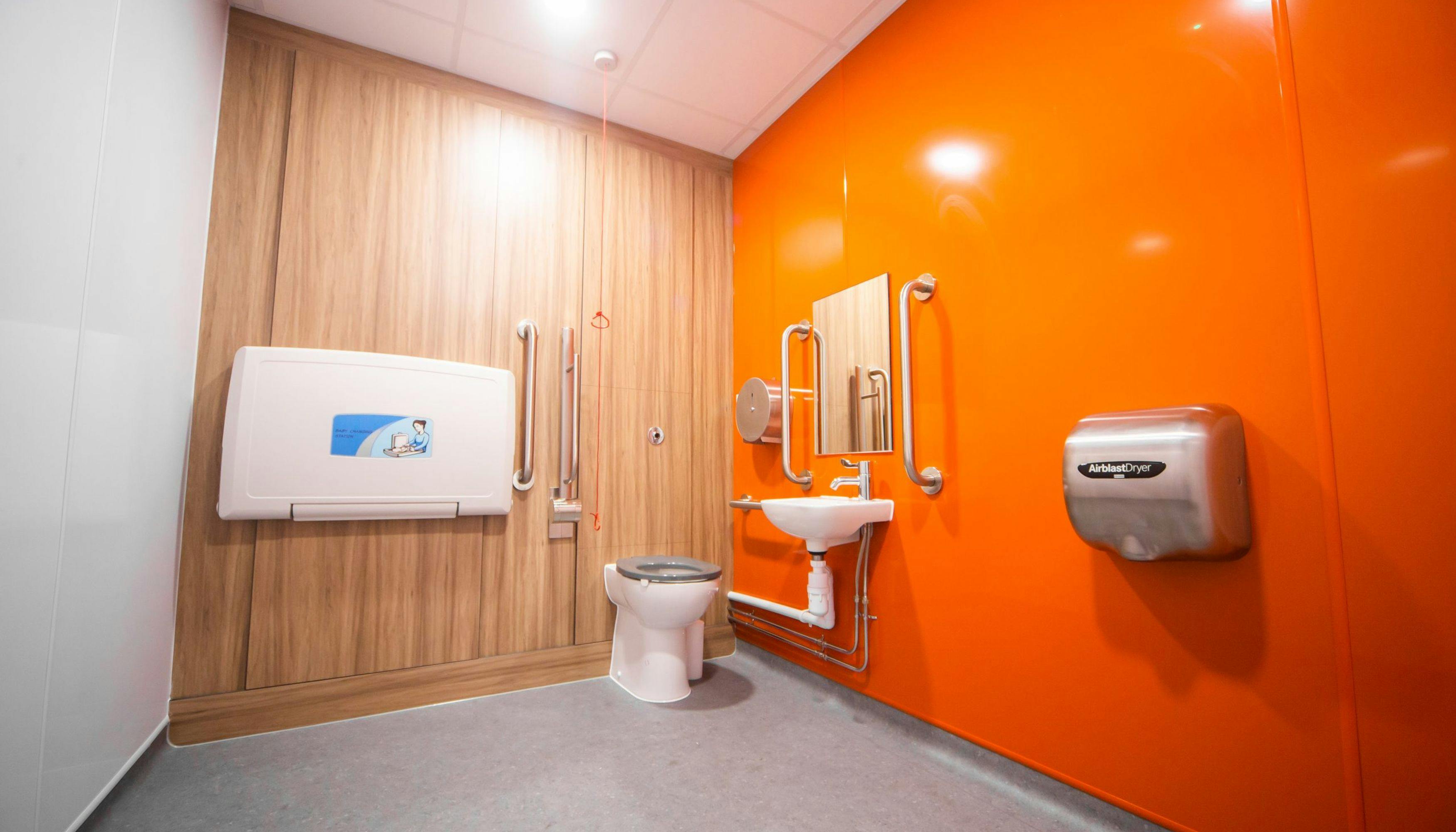
Home bathrooms can absolutely have accessible features, especially if residents are elderly or have disabilities or other sensory impairments. However, this is not a given, as, unlike within a commercial building, there are no laws or regulations which state a residential bathroom needs to be accessible.
Therefore, accessibility is yet another major difference between commercial and residential bathroom installations.
Under the Equality Act 2010, businesses must make reasonable adjustments to ensure facilities are accessible to people with disabilities.
At Inspired Washrooms, we regularly install and refurbish disabled toilets in commercial settings across the UK. There are many aspects which require compliance with the equality laws which exist. Often, this means adding accessible toilet cubicles, adequate turning space for wheelchairs, grab rails, lower basins and wider doors into the washroom design.
Guidance is often based on standards such as Approved Document M. But as with all UK laws and regulations, the guidance can also be subject to change, meaning if a commercial bathroom hasn’t been updated in some time, it may no longer be compliant.
Maintenance And Cleaning

Something that applies regardless of whether a bathroom is found in a domestic or commercial property is that proper cleaning and maintenance are essential towards providing a good user experience.
However, the rules surrounding commercial bathroom cleaning and maintenance are more stringent, owing to the need for public toilets and washrooms to remain safe and sanitary in the eyes of the law.
Many businesses follow guidance from organisations such as the Health and Safety Executive to ensure workplace facilities remain clean and hygienic. The need for heavier and more regular cleaning means that commercial washrooms feature different types of materials than residential bathrooms.
Residential bathrooms typically require far less maintenance, as they are used by fewer people.
Installation Costs
Commercial bathroom installations often involve higher costs due to being larger spaces that require multiple fixtures and cubicles. They require commercial-grade plumbing systems and they must also comply with accessibility requirements. All of these factors make commercial washrooms more expensive to install than the typical home bathroom renovation.
While the costs of a commercial bathroom installation might be higher, there can also be financial repercussions if workplace or public toilet facilities are not up to scratch. For instance, commercial bathrooms must be compliant with various health and safety requirements, and they must also be accessible to those with additional needs.
That said, undertaking a high quality commercial bathroom can also prove to be a smart investment in the long run. Since commercial toilets are subject to heavy use, ensuring they are made from more robust materials can lower maintenance costs over time.
Which Bathroom Type Requires More Planning?

In general, commercial bathrooms require more planning and regulation compliance than residential bathrooms.
Businesses must consider:
- Legal accessibility requirements
- Building regulations
- High-capacity plumbing systems
- Cleaning and maintenance logistics
- User safety and hygiene
Residential bathrooms also benefit from planning, especially when it comes to the design choices like tiles, paint colours or handle styles. But overall, residential bathrooms allow more design freedom and personal customisation since they do not have to consider the same degree of potential legal complications that can arise when any aspect of a commercial bathroom is deemed unsuitable.
For this reason, another key difference between residential bathrooms and commercial washrooms is that commercial washrooms require professional input throughout the planning, design and installation stages.
Enquire About Our Commercial Toilet (Washroom) Installation Services UK
At Inspired Washrooms, we specialise in the design and fit out of commercial washrooms. We provide our services across the UK.
Our work covers office washrooms, hotel washrooms,leisure centre washrooms, hospital washrooms,school washrooms, football stadium washrooms and airport washrooms.
So, it’s safe to say that if you are looking for a contractor to install toilets, wash basins or showers in your commercial environment as part of a full fit out, you’re in the right place!
Talk to us about your washroom project requirements on 0115 811 4242.
Or, please send us a message and we’ll be with you shortly.