London Commercial Washroom Installations FAQs
We’ve answered some of the top questions we receive about getting new toilet facilities installed for your commercial premises in London.
If you don’t see your query, please get in touch with our team.
What Does A Commercial Washroom Installation In London Typically Include?
A commercial washroom installation in London typically encompasses every element required to transform a bare shell or stripped-out room into a fully functioning, compliant and finished facility. At the structural and mechanical level, this means all groundwork and drainage, cold and hot water supply pipework, soil and waste stacks and mechanical ventilation systems designed to meet Part F of the Building Regulations.
Electrical first and second fix follows, covering lighting circuits, sensor-operated systems, hand dryer connections and any emergency lighting or alarm integration required by the building's overall fire strategy.
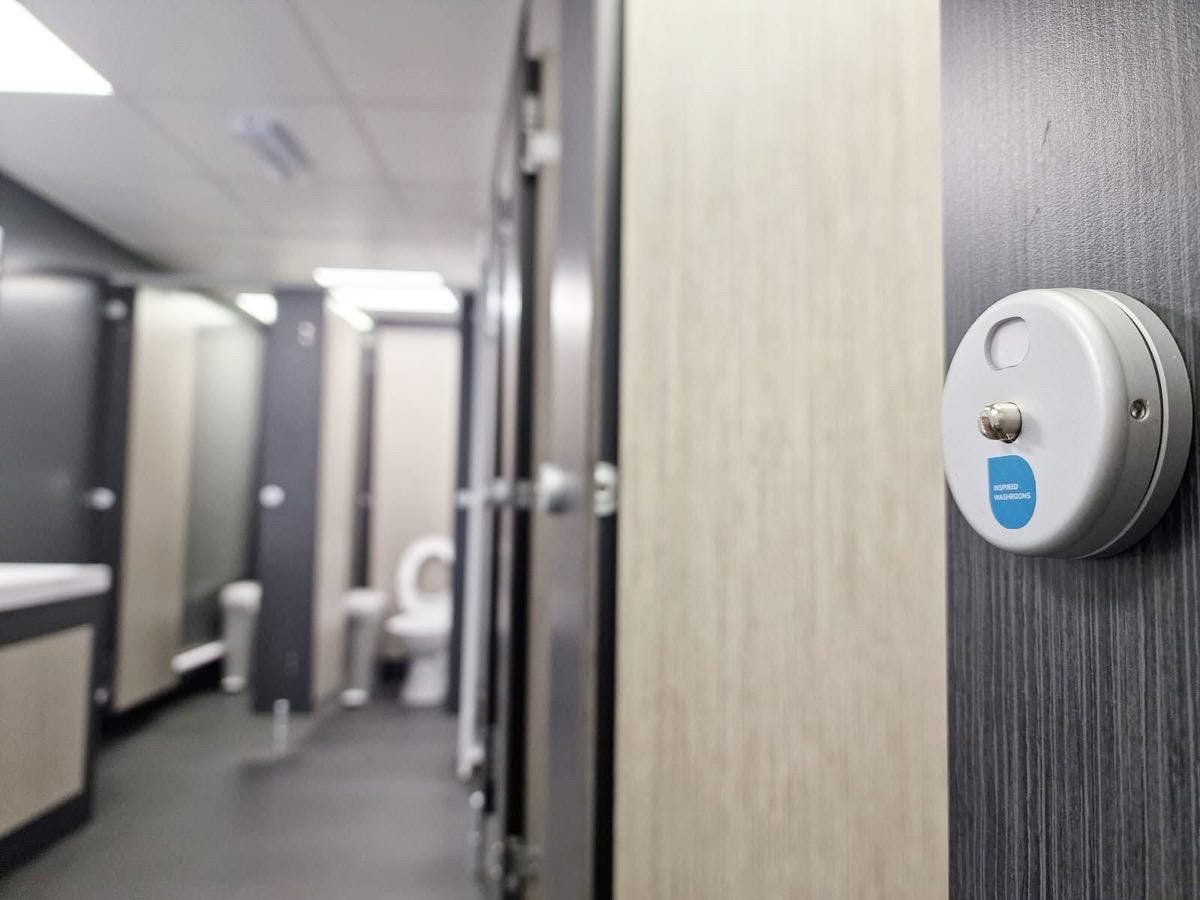
Once the services are in place, wall and floor finishes are applied. Cubicle and screen systems are installed to suit the layout and specification, with solid grade laminate the most common choice in commercial settings for its durability and resistance to moisture.
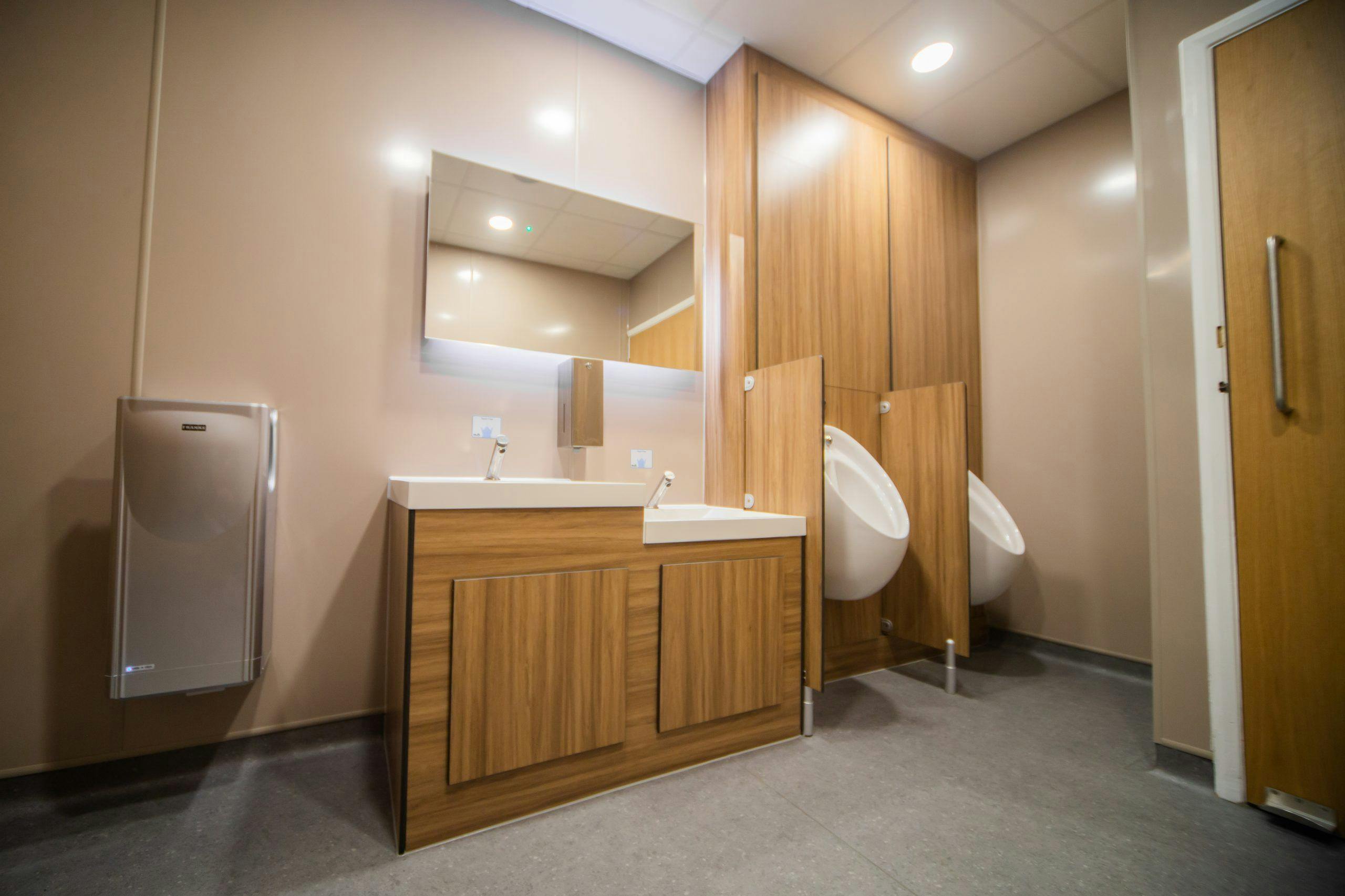
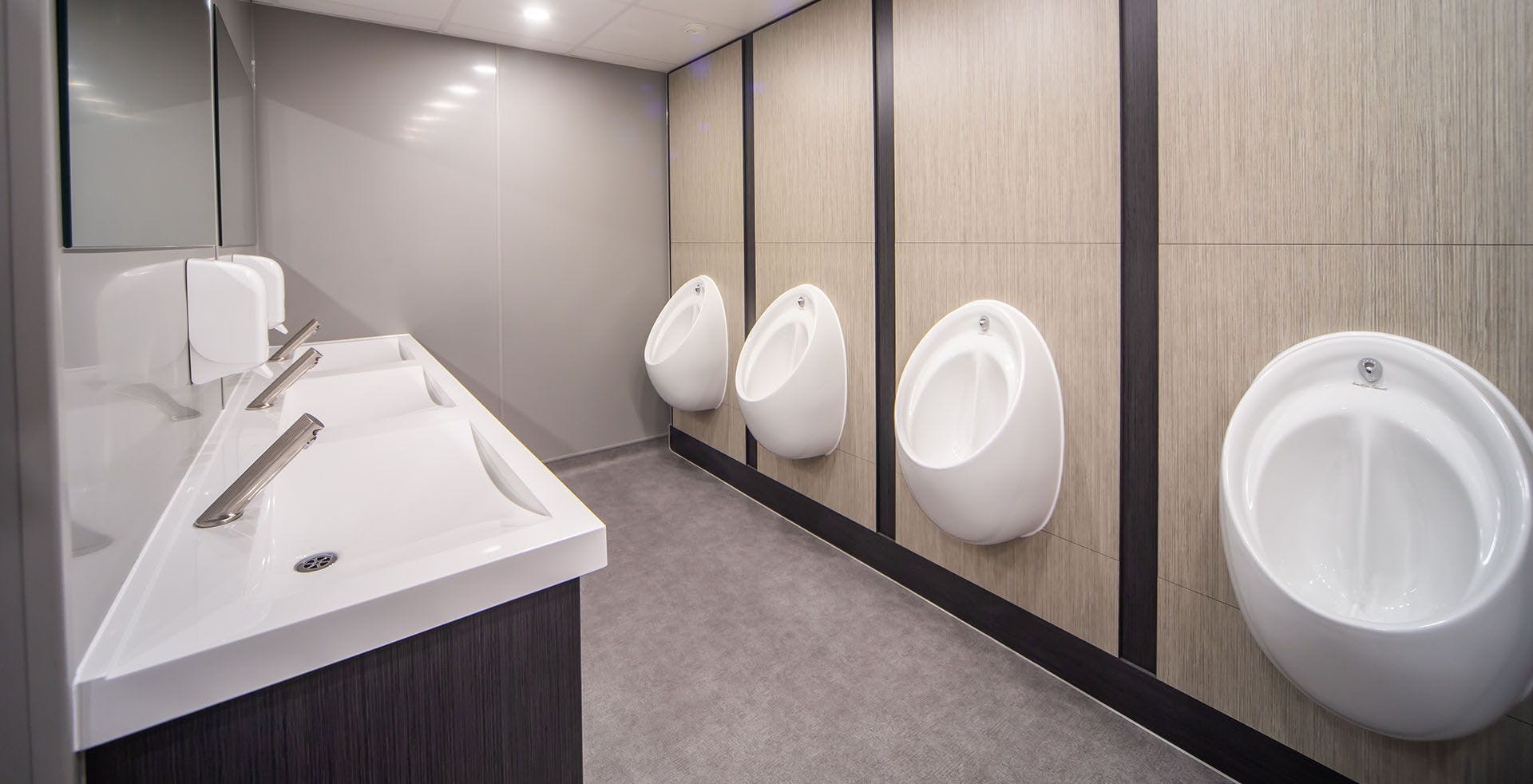
Sanitaryware can then be fitted. Often, this includes the installation of WC pans, cisterns or concealed flush valves, urinals and basins.
Finishing touches include mirrors, soap dispensers, hand dryers or towel dispensers, toilet roll holders and any signage required for accessibility is put in place.
The completed washroom should be handed over with all relevant certificates, including electrical installation condition reports, water hygiene sign-off and any building control completion certificate where a formal application was made.
Do Businesses Have To Provide Toilets For Customers?
In some cases, businesses are required to provide customer toilets. This includes cafes or restaurants which serve food or drink to eat in. Typically, if the establishment has 10+ seats, there is an expectation that toilets will be provided. Additionally, if a premises serves alcohol or if the venue is open after 11pm, then toilets are also required.
In other types of commercial premises, such as shops, there is no mandate which states that toilets must be provided. That said, some London shopping centres can be subject to specific conditions attached to their planning permissions regarding toilet provisions.
Even if toilets aren’t legally required in commercial premises, there can be a range of benefits when they are provided.
How Often Do Commercial Toilets & Urinals Need Updating?
Commercial toilets and urinals do not have a fixed replacement schedule in the way that some building systems do. Instead, facilities managers and commercial property owners in London work to a rough cycle of seven to fifteen years for a full washroom refurbishment. Though, this will depend on the quality of the original installation, the volume of daily use and how well the facility has been maintained in the interim.
However, in high traffic environments such as transport hubs, retail destinations, hotels and restaurants, premises will naturally see faster wear to washroom cubicle systems, sanitaryware, flooring and surface finishes.This may call for cosmetic updates or partial replacements to keep the facility looking presentable and functioning reliably.
Beyond aesthetics and wear, there are practical drivers that can bring forward a refurbishment, including changes to accessibility legislation, water efficiency requirements or a rebrand that makes the existing washroom feel inconsistent with the wider premises.
Older cisterns and urinal flush systems in particular are frequently replaced ahead of the end of their physical life because modern sensor-operated and low-flush alternatives offer significant reductions in water consumption, which matters both for operating costs and sustainability reporting in commercial buildings.
Do You Offer Disabled Toilet Installation In London?
Yes! Inspired Washrooms installs disabled toilets across the UK, including here in London.
Our services include the installation of new toilets as well as the refurbishment of existing disabled toilets.
As professional washroom installers, we can also advise you on aspects such as Part M of the Building Regulations, which provides detailed guidance on accessible and inclusive building design. In practice, this means providing adequate space for wheelchair users, correctly positioned grab rails, accessible sanitaryware at the right heights and clearly identified accessible cubicles.
In London, many larger commercial projects also follow guidance from Transport for London or the Greater London Authority, where public access is involved.
It is also important to meet accessibility requirements in line with the Equality Act 2010.
What Types Of Commercial Premises Need Professional Washroom Installation In London?
We undertake professional washroom installations in a wide variety of commercial premises across London. Some of the most common locations include offices, retail units, restaurants, cafes, hotels, gyms, leisure centres, schools, healthcare facilities, transport hubs and warehouse premises.
As you can appreciate, each commercial setting has different requirements in terms of durability, hygiene, footfall capacity and aesthetics. Our specialist contractors will tailor the specification to your building type and also your overall objectives for your staff or customer toilets.
Can Commercial Washroom Installation Be Carried Out While A Building Is Occupied?
Yes, and it is a common requirement on London commercial projects where closing the building entirely is not practical.
Experienced contractors will plan the works in phases, maintaining access to at least some toilet facilities at all times and scheduling the noisiest or most disruptive elements outside core business hours where possible.
Clear communication with building occupants and facilities managers throughout the programme is also essential to minimise disruption.
What Finishes And Materials Are Best For A High-Traffic Commercial Washroom In London?
Durability and ease of maintenance should drive material selection in any high-footfall commercial washroom.
Porcelain or ceramic tiles with a suitable slip resistance rating are the standard choice for floors, while full-height wall tiling or hygienic wall cladding panels offer a practical and hygienic alternative to painted plaster.
Solid grade laminate (SGL) cubicle systems are widely used for their resistance to moisture, impact and graffiti.
Sensor-operated taps, flush valves and soap dispensers reduce touch points and maintenance requirements, which is increasingly a priority for London commercial clients following heightened awareness around hygiene standards.
How To Design My Customer Toilets In London To Reflect My Luxury High End Brand?
At Inspired Washrooms, we often work with clients who cater towards a luxury market, including retail stores, restaurants and other types of London boutiques.
As specialist commercial washroom designers, we will work with your brand to ascertain the type of washroom features and overall look that meets your vision.
This includes exploring flush fronted cubicles, plus other high end fixtures, fittings and finishes.
Ultimately, designing customer toilets that reflect a luxury brand in London requires the same level of creative intention and attention to detail that goes into your shopfloor, reception or dining room.
Therefore, working with our commercial washroom designers who understand luxury interiors, rather than a standard fit-out contractor, is the most reliable way to achieve a result that genuinely reflects your brand values from floor to ceiling.
Commercial Toilets & Washroom Installations - Which Areas Of London Do You Cover?
Inspired Washrooms installs commercial bathrooms across London. This includes areas such as Bethnal Green, Bloomsbury, Brixton, Camden, Canary Wharf, Chelsea, Chiswick, Clapham, Covent Garden, Croydon, Dulwich, Ealing, Finchley, Fitzrovia, Greenwich, Hackney, Hammersmith, Hampstead, Highgate, Holborn, Islington, Kensington, King’s Cross, Marylebone, Mayfair, Muswell Hill, Notting Hill, Shoreditch, Soho, Stratford, Walthamstow, Westminster and Wimbledon.
Don’t see your area in or near London above? Please contact us as we may still cover your area.