Commercial Toilet Cubicles UK FAQs
Do you have any questions about the toilet cubicles we install in commercial buildings across the UK? We’ve answered some common queries here.
For anything else, or to get a quote for our commercial toilet cubicle services, please call us on 0115 671 6174.
What Are Toilet Cubicles Made Of?
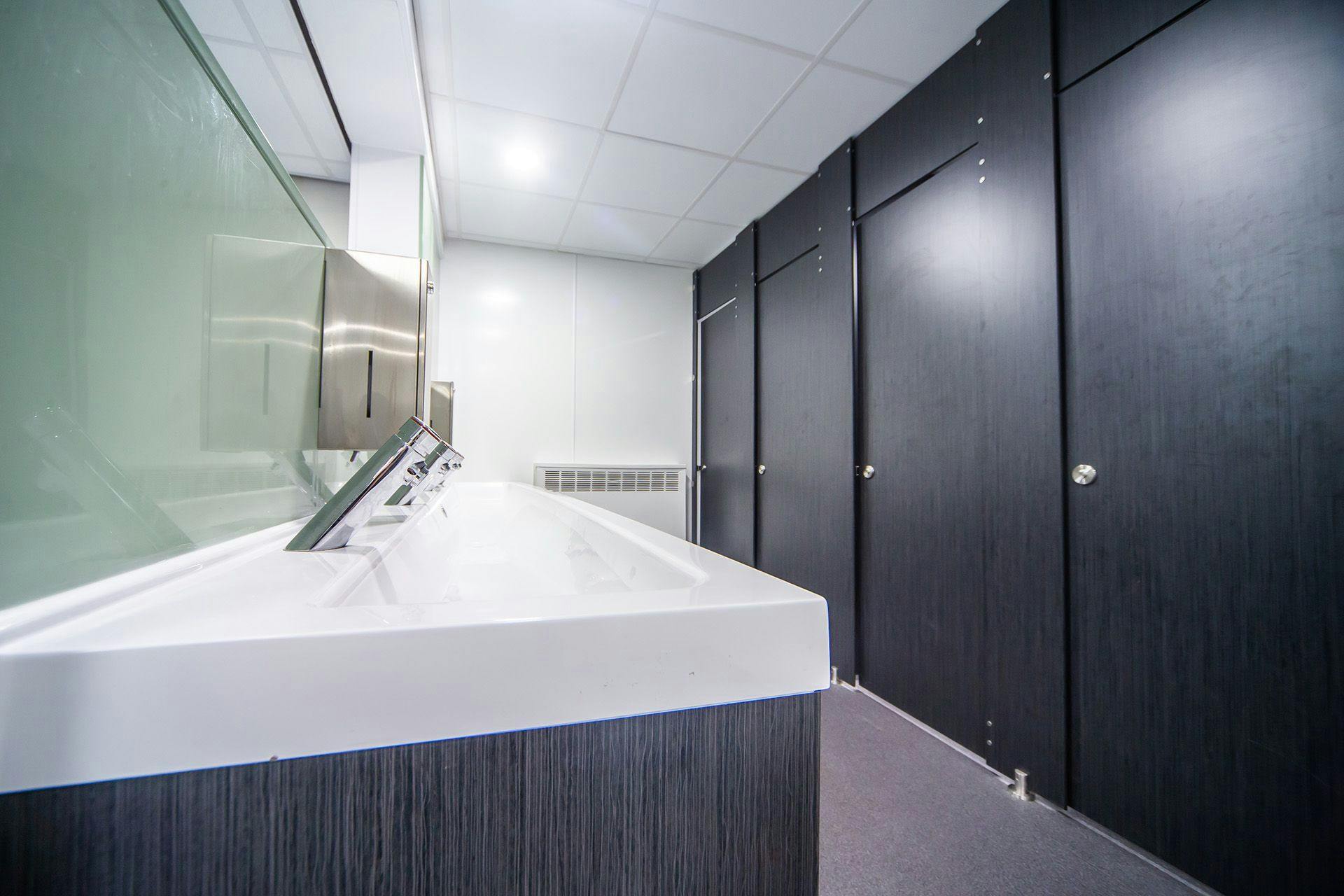
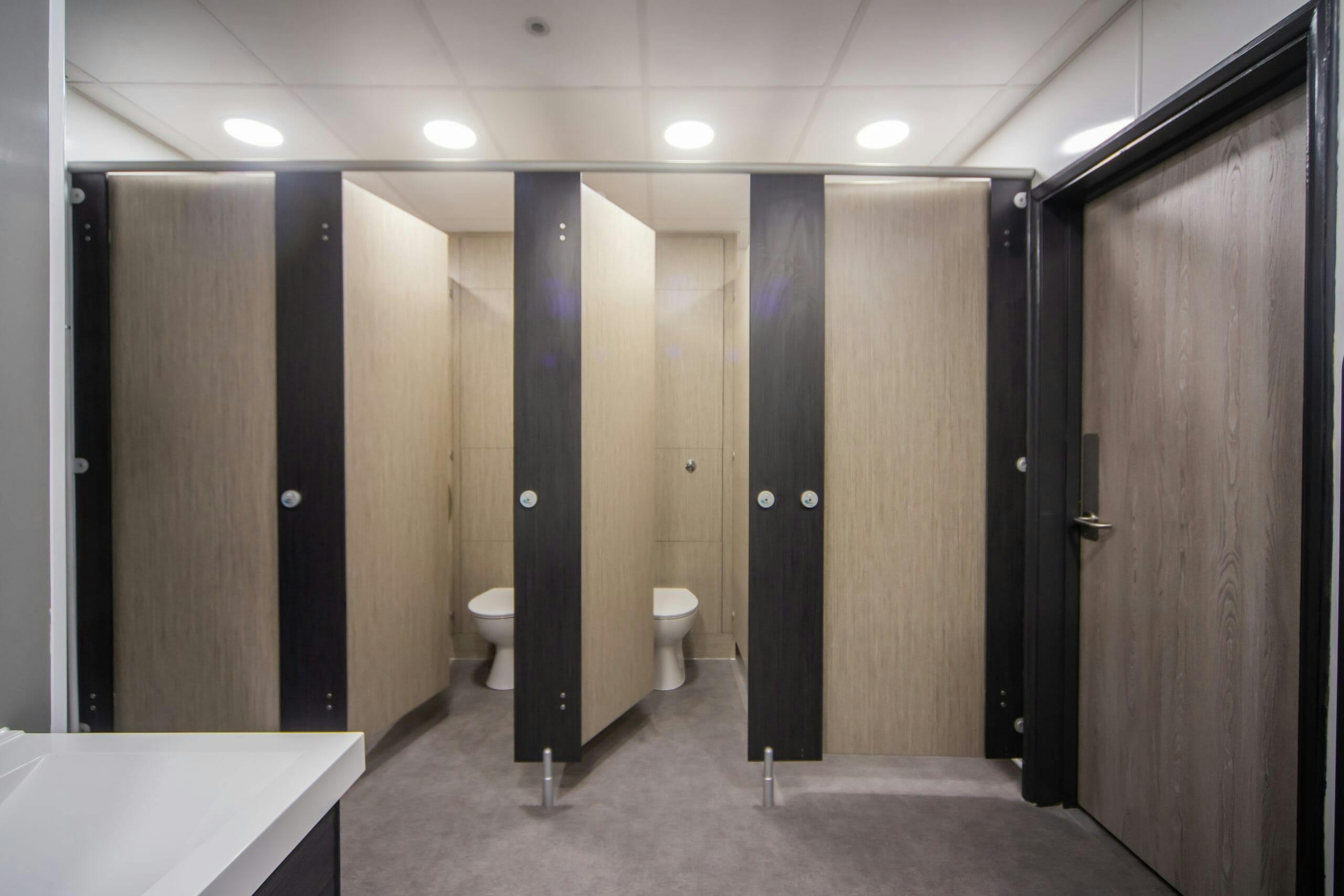
Toilet cubicles in the UK are most commonly made from High Pressure Laminate (HPL), Solid Grade Laminate (SGL), phenolic resin, compact laminate, stainless steel or recycled plastic.
Lots of material options exist for toilet cubicles, because every commercial environment calls for something different. At Inspired Washrooms, we can run you through all of the available materials and colours for your toilet cubicles when you get in touch.
How Many Toilet Cubicles Per Employee?
One toilet is required for up to five employees. This rises to one WC for every additional 25 employees up to 100, then one further WC per 25 above that.
For male only facilities, urinals can offset the number of WCs required. Separate facilities must be provided for men and women where five or more people are employed, unless each toilet is a single-occupancy lockable room. These figures represent legal minimums rather than best practice, and BS 6465-1 provides more detailed sector-specific guidance for public buildings and non-workplace settings.
Toilet provisions should always be calculated on peak simultaneous occupancy rather than total headcount, and at least one fully accessible WC must be included in any compliant washroom installation.
Do You Just Install Toilet Cubicles Or Can You Also Install Sanitaryware?
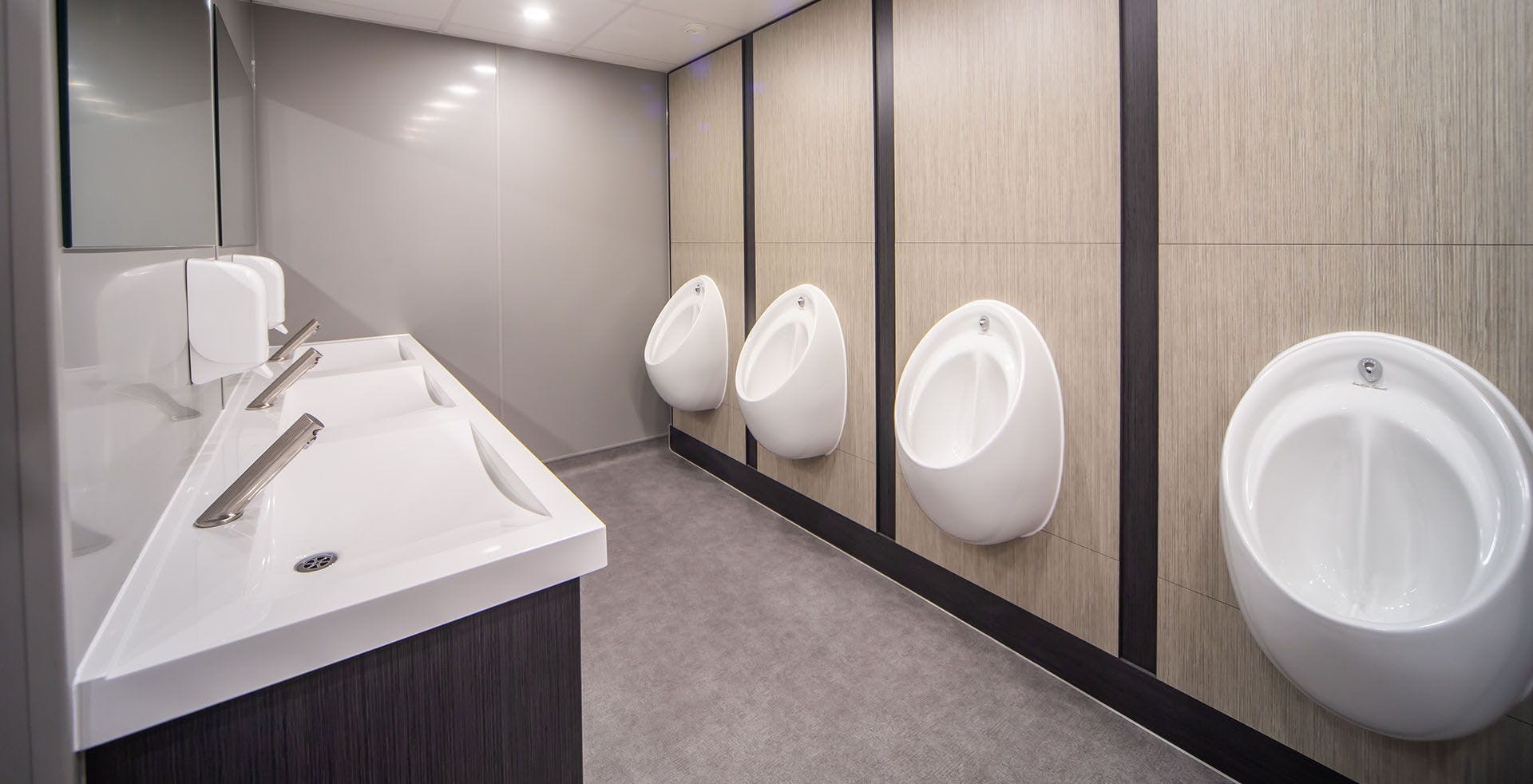
At Inspired Washrooms, we offer a service that can include purely the toilet cubicles or also the sanitaryware, such as toilets, urinals and sinks.
For some projects, refreshing the cubicle walls is all that’s needed to revive the look of the toilet facilities. However, if you also need us to carry out a full refurbishment of the space down to the sanitaryware, plumbing, ceilings and flooring, then our installers can also take care of these aspects for you.
Not sure whether you just need new toilet cubicles or a full toilet refurbishment? No problem! Please contact us today to discuss your requirements with our team.
What Are Close Coupled Toilets?
A close coupled toilet is a WC where the cistern sits directly on top of and connects to the back of the pan, forming a single compact unit. This is the most common toilet configuration found in UK homes and is also widely used in smaller commercial settings, budget refurbishments and secondary facilities where space and cost are primary considerations.
The close coupled design is straightforward to install, easy to source replacement parts for, and available from virtually every sanitaryware manufacturer in the UK market.
Close coupled toilets are available in both rimmed and rimless bowl configurations, with rimless now the recommended specification for hygiene reasons in any setting with more than minimal footfall.
How Long Do Toilets Last?
The lifespan of a toilet depends largely on the quality of the original specification, the level of use it receives, and how well it is maintained, but as a general rule a well-made vitreous china pan in a commercial or domestic setting will last anywhere from 20 to 50 years before the ceramic itself requires replacement.
The components most likely to require replacement well before the pan are the cistern internals, particularly the flush valve, fill valve and flapper, which typically need attention every five to ten years depending on water quality and frequency of use. Seats, hinges and flush mechanisms are similarly subject to wear and are treated as serviceable consumables rather than structural components.
In high traffic commercial environments, the practical lifespan of the full installation is often determined less by the ceramic and more by the condition of the surrounding cubicle, pipework, and fittings, which may warrant a full washroom refurbishment on a ten to fifteen year cycle regardless of whether the pans themselves have failed.
How Wide Should A Toilet Cubicle Be?
When it comes to commercial toilet cubicle widths, there is no one-size-fits-all approach. Instead, it depends on both the type of toilet and also to a degree, your design preferences.
The minimum accepted industry minimum for a single occupancy cubicle in a commercial or public washroom setting is 800mm. However, some building owners choose to go wider than this (i.e. 900mm) to offer greater comfort and easier use.
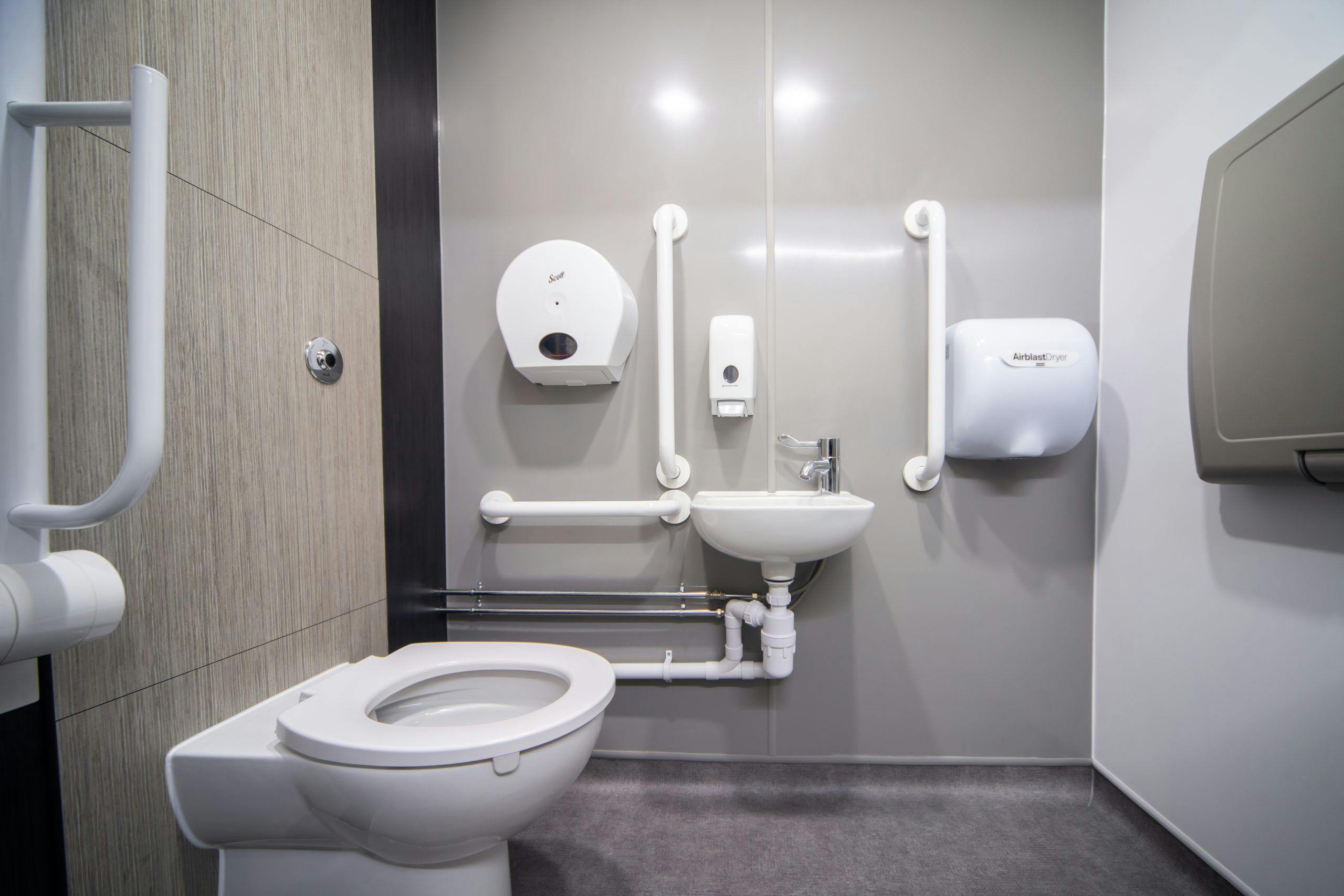
Accessible toilets have different width requirements. The minimum width for a wheelchair accessible toilet cubicle is 1500mm. For an ambulant disabled toilet cubicle, the minimum width is 900mm.
As you can appreciate, there are lots of design caveats to consider to ensure your toilet cubicles are not only compliant with building regulations, but also offer a satisfactory experience.Our washroom designers can cover all of the specifics in terms of cubicle sizes and layouts when you get in touch.
What Material Should Be Used For Toilet Cubicles In High Humidity Environments?
When we install commercial toilet cubicles in high humidity settings such as swimming pools or leisure centre changing rooms, we recommend durable, water-resistant materials like Solid Grade Laminate (SGL) or phenolic.
It’s really important to tailor the cubicle material to the environment, especially in wet or high traffic areas. By choosing a suitable material, your toilets will last longer, will be easier to clean and will also offer the best employee or customer experience.
Do You Offer Vandal-Resistant Toilet Cubicles?
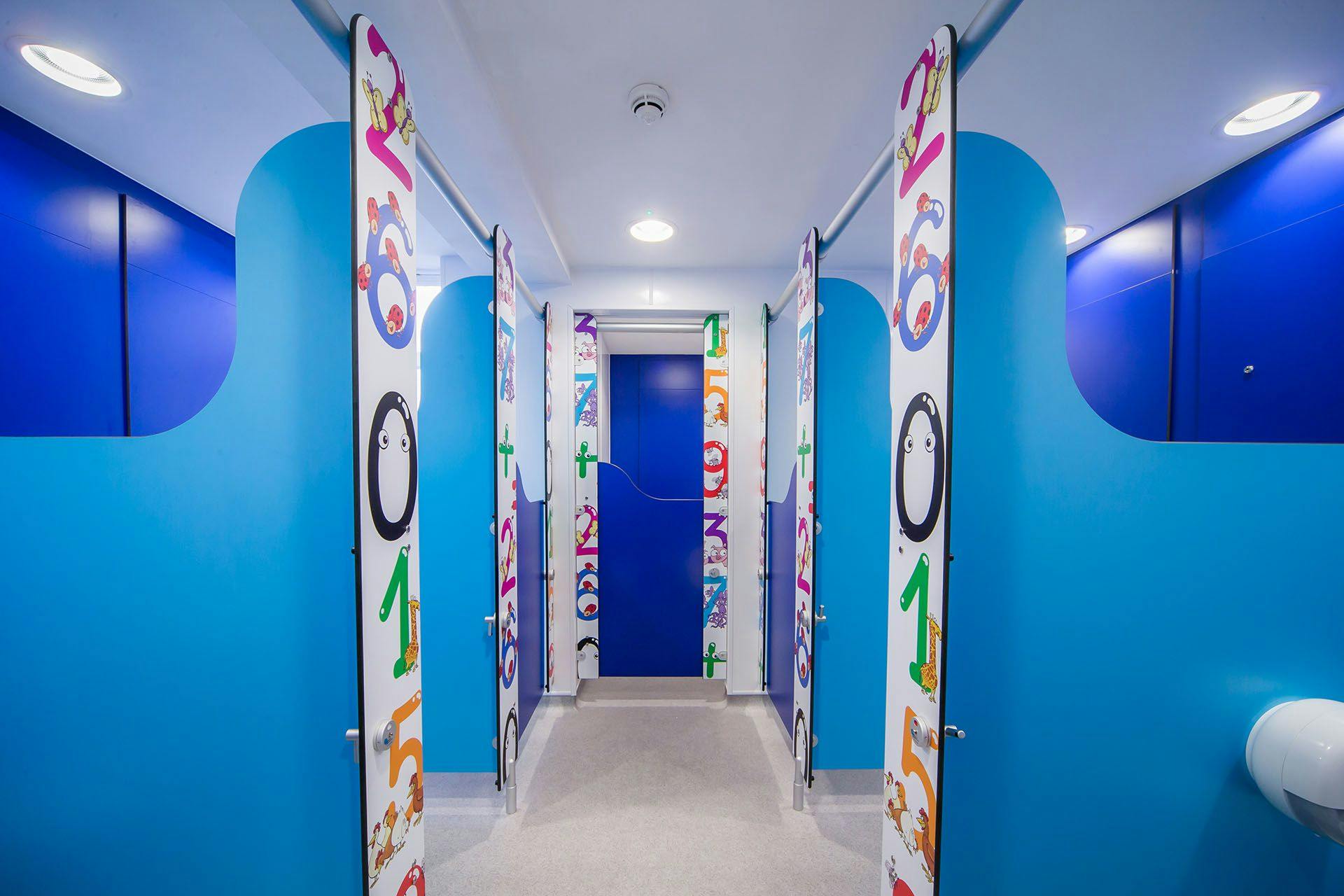
Yes! At Inspired Washrooms, we install toilet cubicles in a wide variety of commercial environments from schools to shopping centres. Our clients will often request vandal-resistant cubicles and washroom features as standard, especially for any high traffic areas.
One of the best options for vandal-resistant toilet cubicles is solid Grade Laminate (SGL)
SGL is highly resistant to impact, scratching, graffiti and moisture. Depending on the specifics of your commercial environment, our toilet cubicle designers can advise you on the best material options.
What Is The Most Hygienic Type Of Toilet?
In commercial settings, we can offer you a number of toilet types and installation approaches to improve hygiene. Rimless toilets are widely considered one of the most hygienic types of toilets, as unlike traditional rimmed toilets which have a hidden ledge under the rim where bacteria, limescale, and waste residue accumulate, rimless designs flush water across the entire bowl surface, eliminating that harbourage point. Most modern commercial specification toilets are now rimless.
If a rimless toilet isn’t the right fit for your project, wall hung toilets along with touchless sensor features, can also help improve hygiene and cleanliness within your commercial toilets.
Do You Offer Commercial Toilet Refurbishment Near Me?
Inspired Washrooms is headquartered in Nottingham. Our toilet cubicle installers primarily work in the surrounding areas of Chesterfield, Derby, Grantham, Leicester, Lincoln, Loughborough, Mansfield, Melton Mowbray, Newark, Retford, Sheffield and Worksop.
However, we do also offer a UK nationwide service meaning if your business is based further afield, we can still help! So whether you need toilet cubicles in Birmingham, Leeds, London, Manchester or elsewhere, please get in touch today for a free quote.