Commercial Bathroom FAQs
If you are looking to get a commercial bathroom installed and you don't see your question below, please contact us.
What Is A Commercial Bathroom?
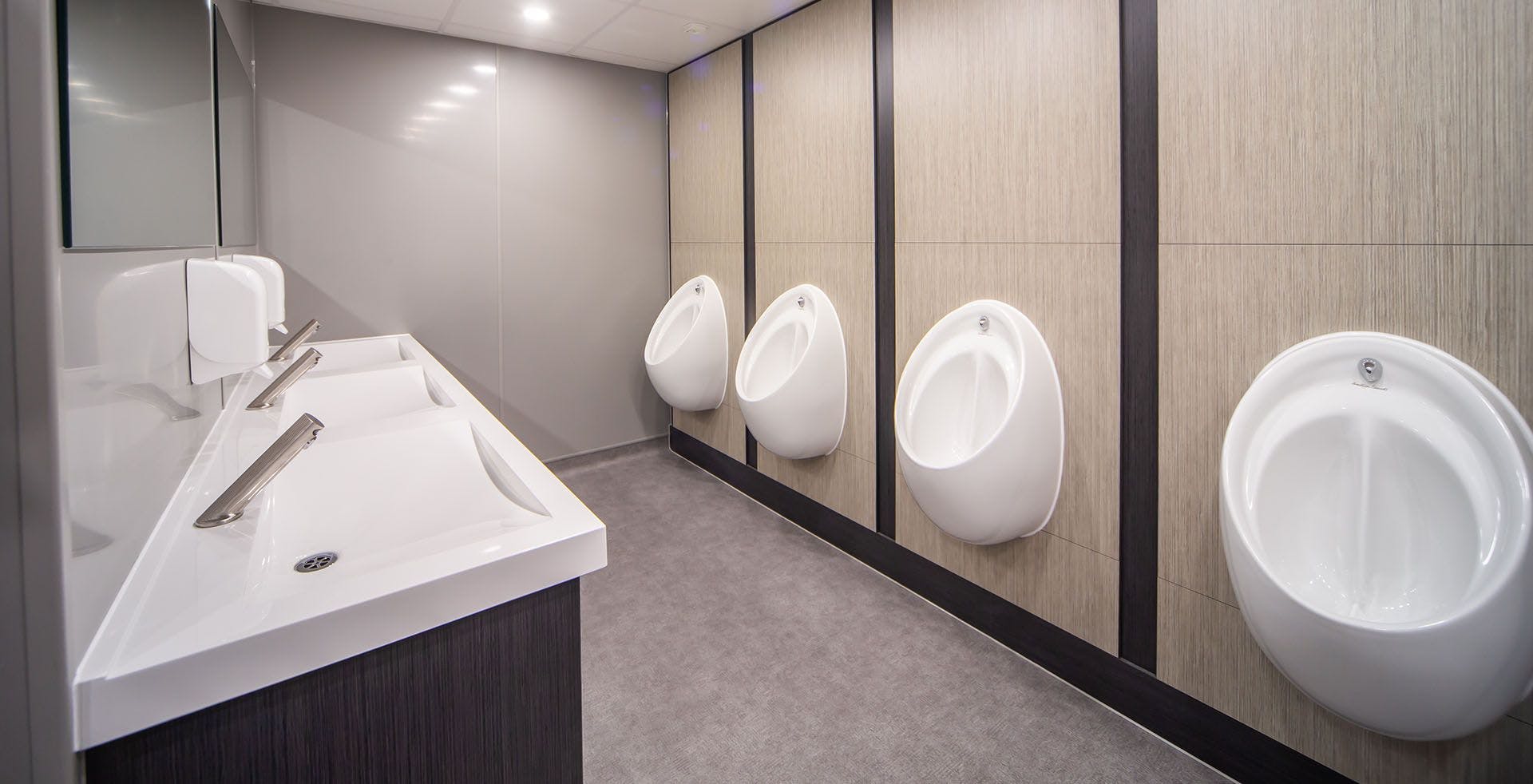
A commercial bathroom is a toilet or washroom facility in a non-domestic building, such as an office, school, hotel, hospital or leisure centre. Unlike a domestic bathroom, it has to cope with high footfall and frequent cleaning. It must also meet Building Regulations for accessibility and toilet provision. That means more durable materials, such as compact laminate cubicles, IPS panelling and wall-hung sanitaryware.
What Does A Commercial Bathroom Refurbishment Include?
A full refurbishment can cover every element of the space:
- Design and layout planning
- Strip out of existing fittings
- Toilet cubicles and IPS panelling
- Vanity units and sanitaryware
- Flooring, wall finishes and lighting
- Ventilation and accessible toilet provision
Some projects only need part of this, such as replacing cubicles or vanity units while keeping the existing layout. A site survey will confirm what your washroom needs.
How Much Does A Commercial Bathroom Cost?
The cost depends on the size of the space, the number of cubicles and fittings and the specification of materials. Whether the layout or plumbing needs to change also affects the price. A like-for-like replacement of cubicles and vanity units will cost far less than a full strip out and redesign. The most accurate way to budget is a site survey followed by a fixed, itemised quote.
How Long Does A Commercial Bathroom Refurbishment Take?
Timescales depend on the size and scope of the project. A single washroom with a straightforward like-for-like replacement can often be completed in a few days. Larger projects across several floors or buildings take longer and are usually phased, so some facilities stay available throughout. A confirmed programme is agreed before any work starts.
Can Work Be Carried Out Without Closing Our Building?
Yes. Most commercial bathroom projects are planned around the building’s day-to-day use. Work can be phased so that one washroom stays open while another is refurbished. Noisy work can be scheduled outside peak hours, and schools often book projects during the holidays to avoid disruption altogether.
What Regulations Apply To Commercial Bathrooms?
Several sets of regulations can apply, depending on the building and the work involved:
- Approved Document M covers wheelchair accessible and ambulant toilet provision.
- Approved Document T, in force in England since October 2024, sets out how single-sex and universal toilets should be arranged in new non-domestic buildings.
- Approved Document G covers sanitation and hot water safety.
- The Workplace (Health, Safety and Welfare) Regulations 1992 set the minimum number of toilets employers must provide.
Our guide to disabled toilet regulations covers accessible toilet requirements in more detail.
What Materials Are Used In Commercial Bathrooms?
Commercial bathrooms need materials that resist moisture, impact and heavy cleaning. Common choices include:
- Solid grade laminate (SGL) or compact HPL cubicles
- Pre-plumbed IPS panels that conceal pipework
- Solid surface or laminate vanity tops
- Slip-resistant flooring
- Wall-hung WCs and basins that make floor cleaning easier
For higher end projects such as hotels and corporate offices, see our guide to luxury commercial bathroom features.
Do You Install Accessible Toilets As Part Of A Commercial Bathroom Project?
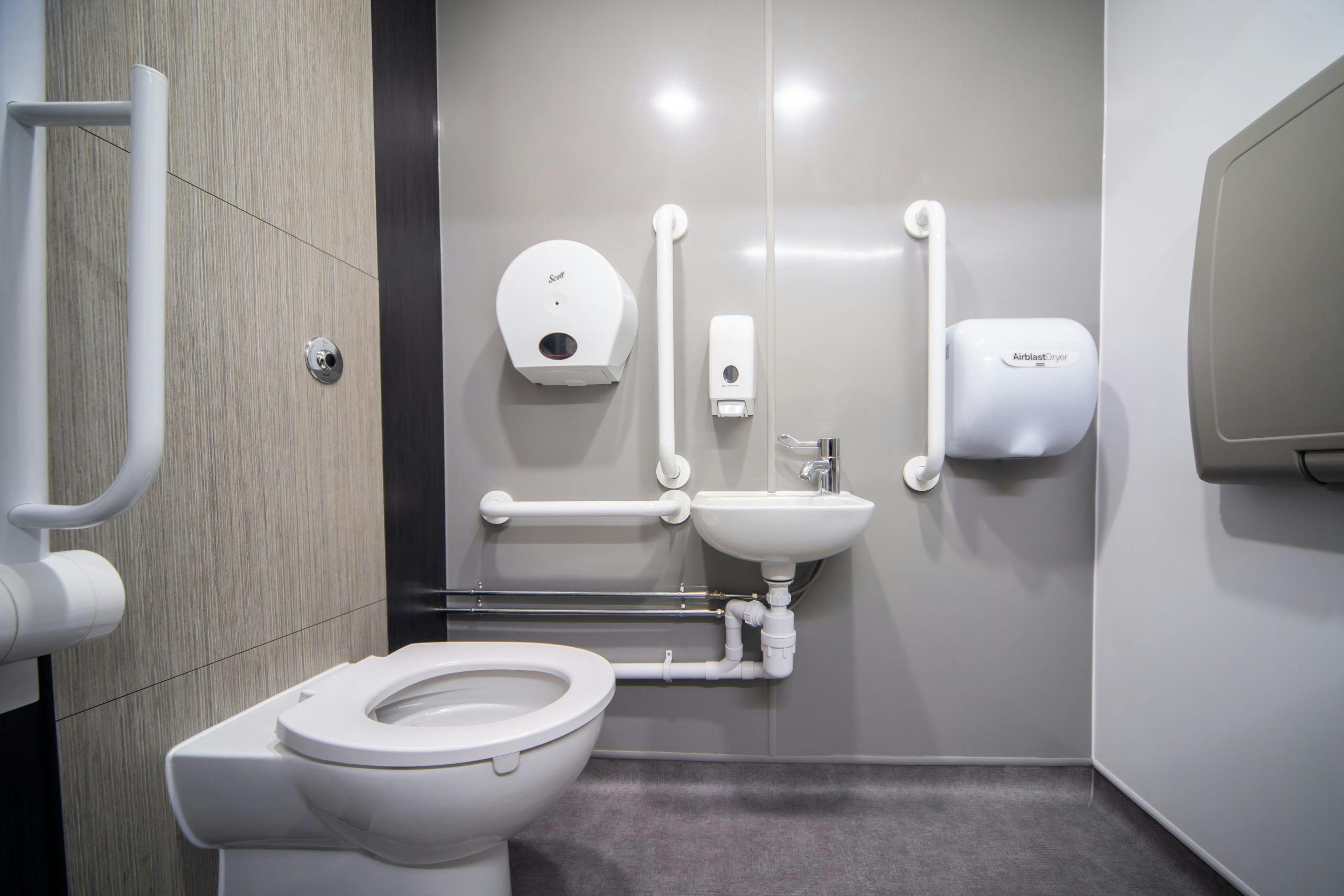
Yes. Accessible toilets, ambulant cubicles and enlarged cubicles can all be included as part of a wider refurbishment, so the whole washroom meets current guidance in one project. Fittings such as Doc M packs, grab rails and emergency alarms are installed to the required heights and positions.
Do You Cover My Area?
Yes! Inspired Washrooms is based in Nottingham and installs commercial bathrooms across the UK. This includes Derby, Leicester, Birmingham, Lincolnshire, Manchester and London. Call 0115 811 4242 for a free, no-obligation quote wherever your project is located.