
Mould is one of the most common problems in UK homes and workplaces and bathrooms are where it tends to appear first.
Black spots on the ceiling, dark patches in the corners of walls and discoloured sealant around the shower are all signs that moisture is getting the upper hand.
The Inspired Washrooms team is here to explain what mould is, what causes it and how to get rid of mould on walls and ceilings.
Crucially, we’ll also explain why mould is a particular problem in commercial washrooms and how a washroom refurbishment can deal with the root cause rather than the symptoms.
What Is Mould?
Mould is a type of fungus that grows on damp surfaces. Its spores are present in the air almost everywhere, both indoors and outdoors and they are harmless until they land somewhere with enough moisture to grow. Once that happens, mould spreads across the surface and releases more spores into the air.
Mould needs three things to thrive: moisture, a food source and a reasonably warm temperature. Plaster, paint, wallpaper, grout, sealant and timber all provide a food source, which is why bathrooms with poor ventilation are such a common problem area.
Most of the mould seen in bathrooms is black or dark green, although it can also be grey, white or even pink. Whatever the colour, it is a sign of excess moisture that needs to be addressed.
What Causes Mould?

Mould is always caused by moisture. The most common sources are:
Condensation
Warm, moist air from showers, baths and kettles meets a cold surface such as a wall, ceiling or window and turns back into water. This is the most common cause of mould in bathrooms.
Poor ventilation
Without an extractor fan or an open window, moisture has nowhere to go and settles on surfaces.
Leaks
Dripping pipes, leaking cisterns, failed seals around baths and showers and roof leaks can all keep walls and ceilings damp.
Penetrating damp
Rainwater can get through damaged brickwork, gutters or render and soak into internal walls.
Rising damp
Groundwater can rise through walls where the damp proof course has failed or been bridged.
Low temperatures
Cold rooms and poorly insulated walls or ceilings create the cold spots where condensation forms.
What Does Mould Smell Like?

Mould has a distinctive musty, earthy smell, often compared to damp cardboard, wet socks or rotting wood. The smell comes from gases released as the mould grows and breaks down the material it is living on.
A musty smell is worth investigating even if you cannot see any mould. It can mean mould is growing somewhere hidden, such as behind wall panels, under flooring, inside a boxed in cistern or behind bathroom units.
How to Remove Mould From Walls
Small areas of mould on walls can usually be cleaned yourself. For patches larger than around a square metre, or mould caused by sewage or floodwater, it is best to call in a professional.
- Protect yourself. Wear rubber gloves, goggles and a mask that covers your nose and mouth, as cleaning releases spores into the air.
- Ventilate the room. Open the windows and keep the door closed so spores do not spread to other rooms.
- Apply a mould remover. Use a specialist mould and mildew spray and follow the instructions on the label. White vinegar is a milder alternative for light growth. Never mix bleach with other cleaning products.
- Wipe the area clean. Use a cloth or soft brush to remove the mould, taking care not to brush dry spores into the air.
- Dry the surface thoroughly. Leaving the wall damp gives mould the chance to return straight away.
- Dispose of cloths safely. Put used cloths in a sealed bag and throw them away.
Mould on non-porous surfaces such as tiles and glass is usually easy to remove. On porous surfaces such as plaster, painted walls and silicone sealant, the mould can grow beneath the surface, so you may need to replace the sealant or redecorate the affected area.
How to Clean Mould off Ceiling
Bathroom ceilings are a common place for mould because warm, moist air rises and condenses on the cold surface above. The process is similar to cleaning walls, with a few extra precautions:
- Use a stable step ladder and avoid overreaching.
- Wear goggles, as spray and debris can fall into your eyes.
- Apply mould remover with a sponge mop or spray rather than scrubbing hard, which can damage plaster and spread spores.
- Once the ceiling is clean and fully dry, use a stain block followed by an anti-mould bathroom paint.
If mould keeps returning to the same spot, check the loft space above for missing or damaged insulation, as this creates a cold patch where condensation forms.
How to Get Rid of Mould on Walls Permanently
Cleaning removes the mould you can see, but it will keep coming back unless you deal with the moisture causing it. To get rid of mould on walls permanently:
- Improve ventilation. Fit an extractor fan in the bathroom and run it during and after every shower or bath. Building Regulations guidance sets minimum extract rates for bathrooms in new and refurbished properties.
- Keep rooms warm. Steady, low level heating reduces cold surfaces where condensation forms.
- Fix leaks quickly. Repair dripping pipes, leaking cisterns and failed seals as soon as you spot them.
- Wipe down wet surfaces. Use a squeegee or cloth on tiles, glass and windows after showering.
- Use moisture resistant materials. Mould resistant paint, quality silicone sealant and wall panels instead of grouted tiles all give mould fewer places to grow.
- Tackle structural damp. Penetrating or rising damp needs a building repair rather than a cleaning product.
Mould in Domestic and Commercial Bathrooms
Mould in a home bathroom is usually down to condensation from daily showers combined with a small or ineffective extractor fan. It is unsightly and can be unpleasant, but it is often manageable with better ventilation and regular cleaning.
Commercial bathrooms face the same issues on a much larger scale.
The Top Causes of Mould in Commercial Washrooms?
High footfall
Offices, schools, gyms, leisure centres and hospitals see hundreds of visits a day, producing far more moisture than a domestic bathroom.
Inadequate or failed ventilation
Extraction systems that are undersized, poorly maintained or switched off to save energy are one of the most common causes.
Hidden leaks
Concealed cisterns, pipework and duct spaces can leak for weeks before anyone notices, soaking walls and floors out of sight.
Worn grout and sealant
Heavy use and frequent cleaning break down grout lines and seals, letting water get behind tiles and into the wall.
Unsuitable materials.
Chipboard cubicles, painted plaster and porous surfaces absorb moisture and provide an ideal surface for mould.
Wet cleaning routines
Floors and walls that are mopped or hosed daily but never fully dry out stay damp for long periods.
The Risks of Mould in Commercial Settings
- Health concerns. According to the NHS, damp and mould can affect breathing problems, allergies and asthma and some people are more vulnerable than others, including children, older people and those with existing health conditions. This is especially important in schools and healthcare settings.
- Legal duties. The Workplace (Health, Safety and Welfare) Regulations 1992 require employers to provide suitable, clean and well ventilated welfare facilities.
- Reputation. A mouldy washroom gives staff, pupils, customers and visitors a poor impression of the whole building.
- Damage to the building. Long term damp can rot timber, damage plaster, swell cubicle panels and loosen tiles, turning a cleaning issue into an expensive repair.
- Ongoing costs. Repeated cleaning, redecorating and repairs add up when the underlying cause is never fixed.
How a Washroom Installation Can Fix Existing Mould Issues
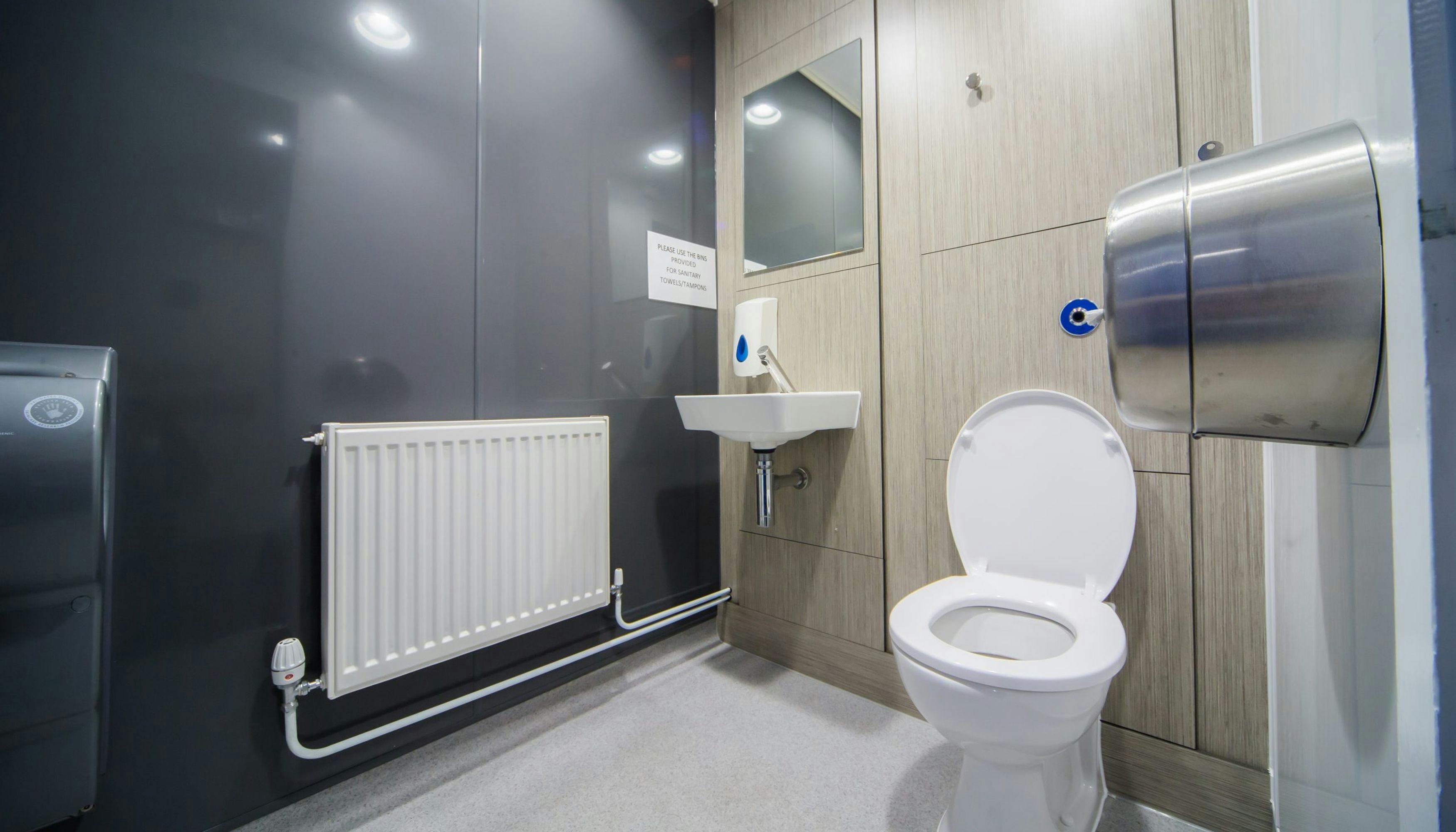
When mould keeps returning despite regular cleaning, a commercial washroom refurbishment is often the most effective long term solution. Rather than treating the surface, a new installation removes the conditions that allow mould to grow.
- Finding the source. A survey identifies whether the problem comes from condensation, ventilation, leaks or structural damp so the cause is dealt with properly.
- Removing affected materials. Mould damaged plaster, boards, sealant and fittings are stripped out rather than painted over.
- Better ventilation. Extract ventilation can be planned into the washroom design from the start, sized for the number of users.
- Moisture resistant cubicles. Modern toilet cubicles made from compact grade laminate are water resistant and will not swell or harbour mould in the way older chipboard panels can.
- Accessible plumbing. Pre plumbed IPS units hide pipework and cisterns behind panels with dedicated access points, so leaks can be spotted and fixed before they cause damp.
- Easy clean surfaces. Hygienic wall finishes and sealed flooring reduce the number of joints and grout lines where moisture and mould can collect.
Mould UK FAQs
Is mould in a bathroom dangerous?
Mould can affect people with breathing problems, allergies, asthma or weakened immune systems. Small areas should be cleaned promptly and the cause of the moisture fixed.
Does bleach kill mould?
Bleach can remove the surface staining on non-porous surfaces such as tiles, but it does not reach mould growing beneath porous materials such as plaster or sealant. A specialist mould remover is usually more effective.
Why does mould keep coming back in my bathroom?
Mould returns when the moisture causing it has not been dealt with. Improving ventilation, keeping the room warm and fixing leaks are the most effective ways to stop it.
Need to Start Again With a Commercial Bathroom or Washroom? Get a Free Quote From Inspired Washrooms
Inspired Washrooms designs and installs commercial washrooms across the UK, from offices and hotels to school toilets and healthcare facilities.
If mould is a recurring problem in your washroom, call us on 0115 811 4242 or contact our team for free, no obligation advice.