
Choosing the right tap might seem straightforward, but walk into any bathroom showroom or browse a trade catalogue and you will quickly find there are more decisions involved than most people expect.
Handle style, mounting position, water pressure compatibility, flow control all affects how a tap performs in real use and getting it wrong can be expensive to fix.
This guide covers the main types of bathroom taps available in the UK, explains what each one does well, and sets out the factors worth thinking about before you specify or buy.
For those looking to specify taps for a commercial washroom installation, we'll also cover the additional considerations that apply in commercial settings. That's because aspects such as hygiene compliance, maintenance burden and volume of use change the picture considerably.
Types of Bathroom Tap: The Standard Offerings
Bathroom taps vary far more than most people realise, not just in terms of how they look, but in how they mount, how they control temperature and flow and how well they suit different plumbing setups.
Knowing the main categories makes your purchase decision easier to make.
Pillar Taps

Pillar taps are the traditional two tap format of one for hot, one for cold. They are fitted through separate holes in the basin or bath. Pillar taps require a two hole fitting, which means they are most commonly found in older UK homes where the original bathroom furniture was designed around them.
Their main limitation is that they deliver hot and cold water separately, so achieving a comfortable temperature requires running both simultaneously and mixing in the basin. This is less of an issue for baths, where you fill the tub before use, than for hand basins where you are washing under running water. Pillar taps remain popular in period style refurbishments for aesthetic reasons, but they are rarely the practical choice for new installations.
Monobloc Taps

A monobloc is a single body tap that fits through one hole and controls both hot and cold water. The vast majority of taps sold in the UK today are monobloc designs. They are compact, straightforward to install, and available in every price bracket and finish imaginable.
Within the monobloc category there are single lever designs, where one handle moves up and down for flow and left and right for temperature, and dual handle designs, where separate controls manage each function. Single lever monoblocs are faster and easier to use, particularly with soapy hands. Dual handle versions give more precise temperature control and suit traditional aesthetics better.
Mixer Taps

Mixer taps blend hot and cold water before it reaches the spout, delivering a single mixed flow. The term is sometimes used interchangeably with monobloc, and many monobloc taps are mixers, but mixer taps can also be deck mounted with two separate handles or wall mounted with concealed pipework.
The practical benefit of a mixer over pillar taps is that temperature control is immediate and precise. For hand basins in particular, this makes a significant difference to usability. Bath mixer taps often include a diverter valve that redirects water to an attached shower head, combining two functions in a single fitting.
Wall Mounted Taps

Wall mounted taps bring the spout and controls out of the wall rather than up through the basin surround. They are primarily a design choice as removing fittings from the basin surface creates a cleaner aesthetic and makes the basin itself easier to clean. However, they do require concealed pipework behind the wall, which adds cost and complexity to installation.
Wall mounted taps are more common in higher specification bathroom refurbishments and work well with countertop or semi recessed basins where a deck mounted tap would look disproportionate. They are less practical in retrofit situations where existing pipework would need to be rerouted.
Freestanding Taps

Freestanding taps are floor mounted and connect to pipework beneath the floor rather than through a basin or bath. They are almost always used with freestanding baths, as the tall spout arcs over the bath rim, making them just as much a statement piece as a functional fitting.
They are not relevant to most standard bathroom installations and carry a significant cost premium, but in high end residential and hospitality settings they remain a popular choice.
Choosing Taps Based On Water Pressure: Why This Matters In The UK
Water pressure compatibility is a consideration that catches more people out in the UK than in many other countries, because a significant proportion of UK housing stock still relies on gravity fed plumbing systems.
In a gravity fed system, cold water is stored in a tank in the loft and hot water in a cylinder, typically on an upper floor or in an airing cupboard. The pressure available at the tap is determined by the height difference between the tank and the outlet. Often, this is quite low.
Homes with combination boilers or mainspressure unvented hot water cylinders have much higher available pressure at the tap. The two systems are not always obvious from the outside, particularly in older properties that have been partially updated.
The practical consequence is that not all taps work on all systems:
- High pressure taps are designed for combi boilers and mains pressure systems. Used on a gravity fed system, they will produce a poor flow that is unlikely to improve without a pump.
- Low pressure taps are designed specifically for gravity fed systems and open vented cylinders. They have wider internal waterways and valves that open at low pressure.
- Dual pressure or universal taps are engineered to function across both systems and are the safest specification choice when the system type is not known or when a property has mixed pressure across hot and cold supplies.
If you are refurbishing a bathroom in an older property, checking the water system type before specifying taps avoids the problem of fitting a tap that delivers a trickle.
Choosing A Tap Finish
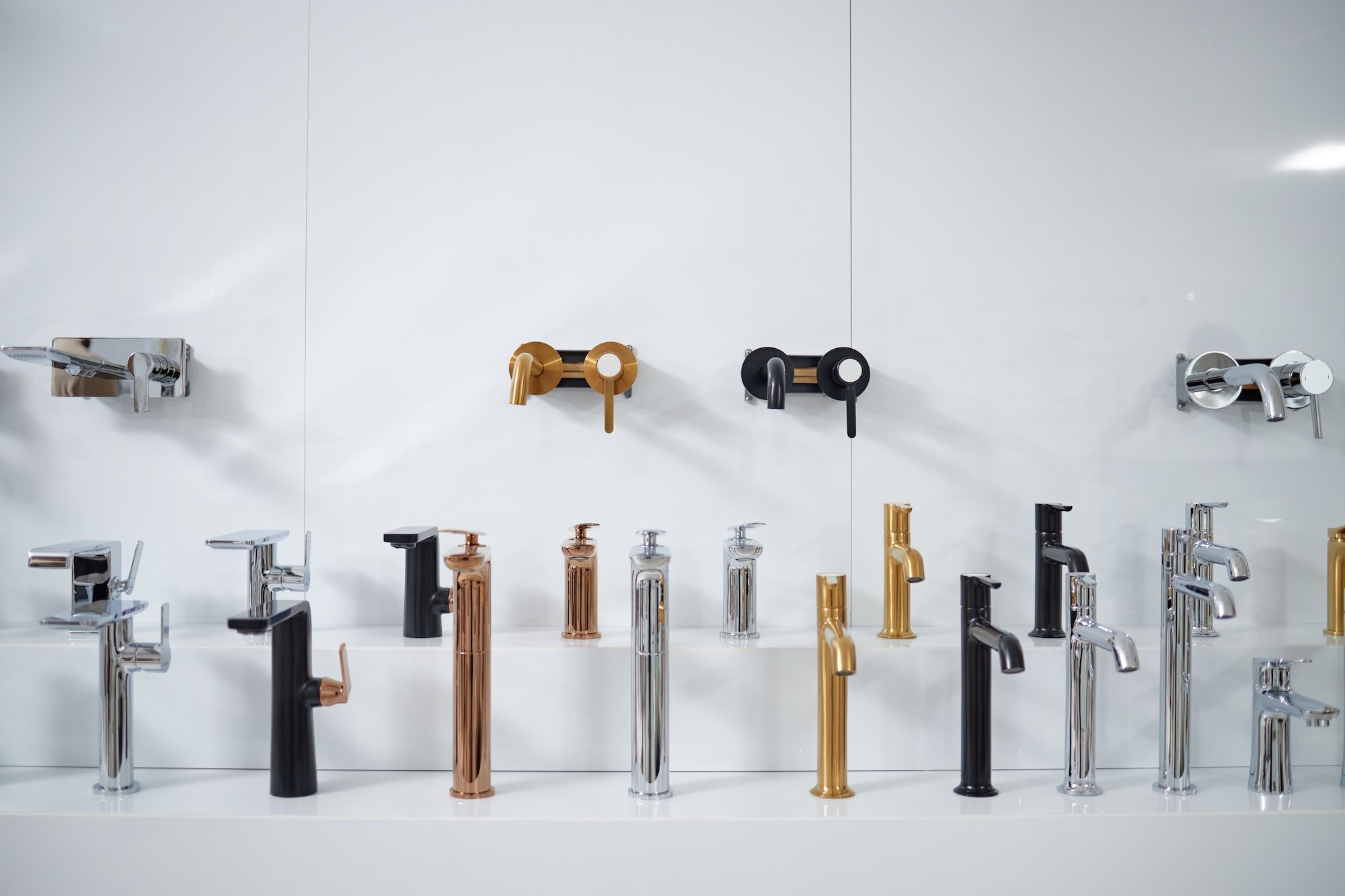
Chrome has been the default bathroom tap finish in the UK for decades and remains the most practical choice for most settings. Namely, because chrome is durable, widely available and easy to clean.
In recent years, brushed and satin finishes have also grown substantially in popularity, as have brass, gunmetal, matt black and brushed nickel.
The main consideration with non chrome finishes is consistency across the room. Mixing tap finishes with towel rails, shower fittings, flush plates and accessories in different tones can look uncoordinated. In a planned refurbishment, specifying a brassware range that covers all of these components in a matching finish produces a more cohesive result.
It is also worth noting that some statement finishes (i.e. unlacquered brass) are more maintenance intensive than chrome. They develop a patina with use, which some people find desirable and others find difficult to manage. Lacquered versions are easier to maintain but can show wear differently over time.
Commercial Tap Types
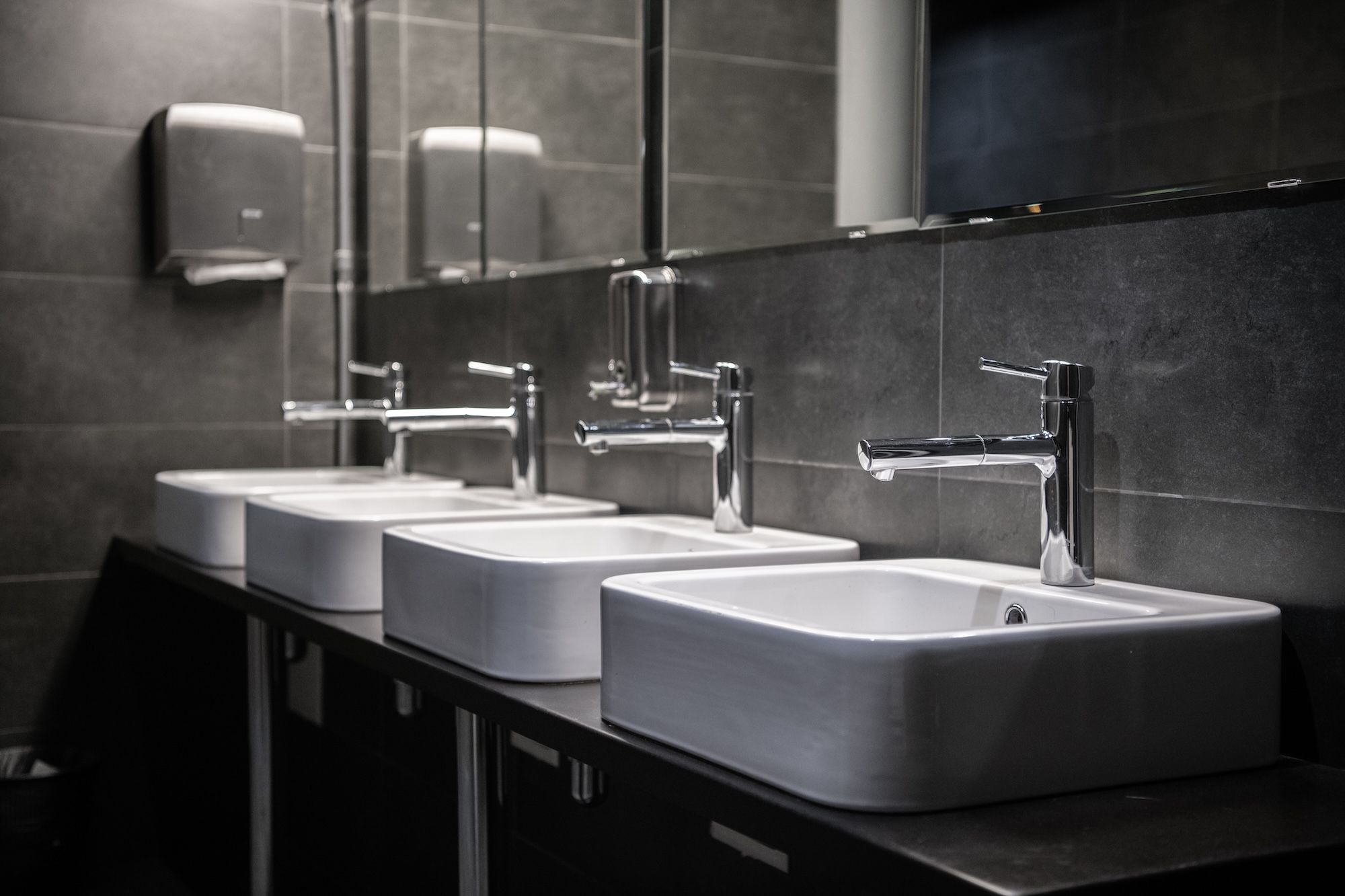
In a commercial washroom, the considerations that drive tap selection shift considerably.
Volume of use, hygiene requirements, water efficiency, maintenance access and in some settings regulatory compliance all become primary factors. The aesthetic decisions that dominate residential tap selection move into the background.
Below is a breakdown of the tap types most relevant to commercial washrooms by sector.
Sensor And Infrared Taps
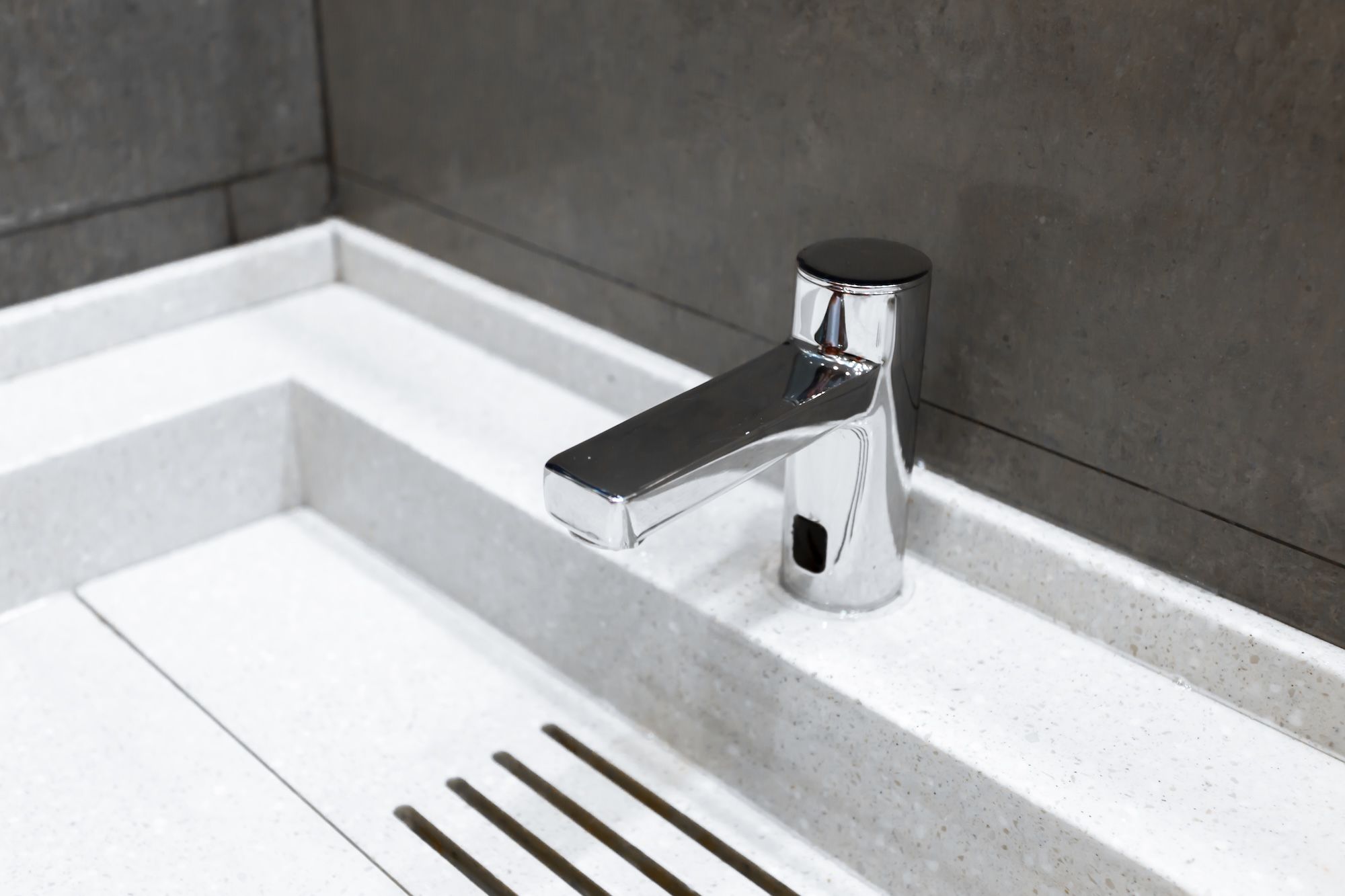
Sensor taps activate automatically when hands are placed beneath the spout and switch off when they are removed. They have become the default specification for commercial hand basins in many settings for several reasons:
- They eliminate the need to touch the tap with dirty or contaminated hands, reducing cross contamination risk.
- They prevent taps being left running, which reduces water consumption significantly in high footfall settings.
- They remove the physical handle, reducing the main target for vandalism and mechanical wear.
The trade off is that sensor taps require either a mains power supply or battery operation and a mechanism for battery replacement. In high use settings, battery life can be shorter than expected, so mains powered sensor taps are often the more practical choice where wiring can be incorporated into the fit out.
Sensor taps are particularly appropriate for schools, public buildings and healthcare settings. In office washrooms they are increasingly standard.
Push Button Timed Flow Taps
Timed flow taps deliver a fixed duration of water per press which is typically between five and fifteen seconds. The tap will then shut off automatically. They do not require any power source or battery, which makes them simpler to maintain than sensor taps and more reliable in settings where electrical supply to the basin is complicated.
They are the standard tap type in many school washrooms, public conveniences and leisure facilities. Their main limitation is that users who need to wash for longer than the timed flow allows must press again, which can feel inconvenient in settings (i.e. healthcare) where thorough handwashing is important.
Thermostatic Mixing Valves (TMVs)
A thermostatic mixing valve blends hot and cold water to a preset safe output temperature before it reaches the tap, regardless of fluctuations in supply temperature or pressure. In commercial and institutional settings, TMVs address two distinct concerns: scalding risk and Legionella control.
Legionella bacteria thrive at temperatures between 20°C and 45°C. Hot water storage systems are typically maintained at 60°C or above to prevent growth, but delivering water at that temperature at the outlet creates a scalding risk, especially in settings such as care homes, schools and NHS settings where vulnerable users may not be able to react quickly enough. TMVs allow the stored water to remain at a safe temperature while delivering blended water at the outlet at a temperature that is warm enough to be useful but safe enough to prevent scalding.
In healthcare settings, TMV3-rated thermostatic mixing valves are required by HTM 04-01 (the NHS guidance on water safety in healthcare premises). Care homes are similarly expected to follow safe hot water temperature guidance under the Health and Safety at Work Act. Schools and other settings with vulnerable users should also consider TMV specification carefully.
TMVs can be fitted at the point of use. Point-of-use TMVs are generally preferred because they eliminate any length of pipework between the valve and the outlet where water can cool into the Legionella risk range.
Commercial Mixer Taps
In hospitality settings such as hotels, restaurants and bars, a standard deck mounted or wall mounted mixer tap remains the most common commercial specification. The aesthetic expectations of guests in these environments are closer to the residential standard, so the clinical practicality of a push button or sensor tap would often feel out of place.
For hospitality, the commercial considerations are durability rather than hygiene automation: taps that will withstand significantly higher use than a domestic equivalent, specified in finishes that hold up to regular cleaning with commercial cleaning products. Brushed or satin finishes often perform better than polished chrome in high use settings because they show water marks and minor scratches less visibly.
Taps For Accessible And Changing Places washrooms
In accessible washrooms designed to comply with BS 8300 and Approved Document M, tap selection should account for the needs of users with limited grip strength or dexterity.
Lever operated taps are generally preferred over knob or cross head controls. Quarter turn ceramic disc mechanisms require less effort to operate than traditional rubber washer taps and are typically more appropriate.
Changing Places toilets which are specialist facilities for people with profound and multiple learning disabilities who cannot use standard accessible toilets, require specific equipment layouts, but tap and basin specification should similarly prioritise lever operation and sensor or single movement activation where possible.
Water Efficiency In Commercial Settings
In high footfall commercial washrooms, water consumption through hand basins can be surprisingly significant.
Standard residential taps typically flow at around nine to twelve litres per minute. Aerator inserts, which introduce air into the flow, can reduce this to four or five litres per minute with no noticeable reduction in washing effectiveness. Timed flow taps and sensor taps further reduce consumption by eliminating the possibility of taps being left running.
For buildings targeting BREEAM certification or where water efficiency is a sustainability priority, specifying flow regulated taps and sensor or timed flow activation is a straightforward way to reduce water use without requiring any behavioural change from users.
Commercial Washroom Refurbishments Across The UK - Get a Free Quote Today!
Are your commercial washroom or bathroom facilities in need of an update? Perhaps you’re looking to install a brand new facility?
Inspired Washrooms installs washrooms across the UK. Whether you’re interested in learning more about the project timescale or just want to get the ball rolling with a beautiful new design, you’re in the right place.
Download our Inspired Washrooms Brochure to view our full range of products and services.
Or, for help and advice with anything we’ve mentioned above, please get in touch on 0115 811 4242 and our friendly team will get back to you.