
Your customer toilets say more about your business than you might think. A tired, cramped or poorly maintained washroom can undo the good impression left by great service, while a clean, well designed space tells visitors you care about the details.
Whether you run a restaurant, a pub, a café, a gym or a retail space, the expectations placed on commercial toilets are rising. Customers now expect hygiene, privacy and accessibility as standard, and in 2027 that bar will only climb higher.
Here are seven practical ways to improve your customer toilets, starting with quick wins and building up to a complete washroom upgrade.
1. Make accessibility a priority, not an afterthought
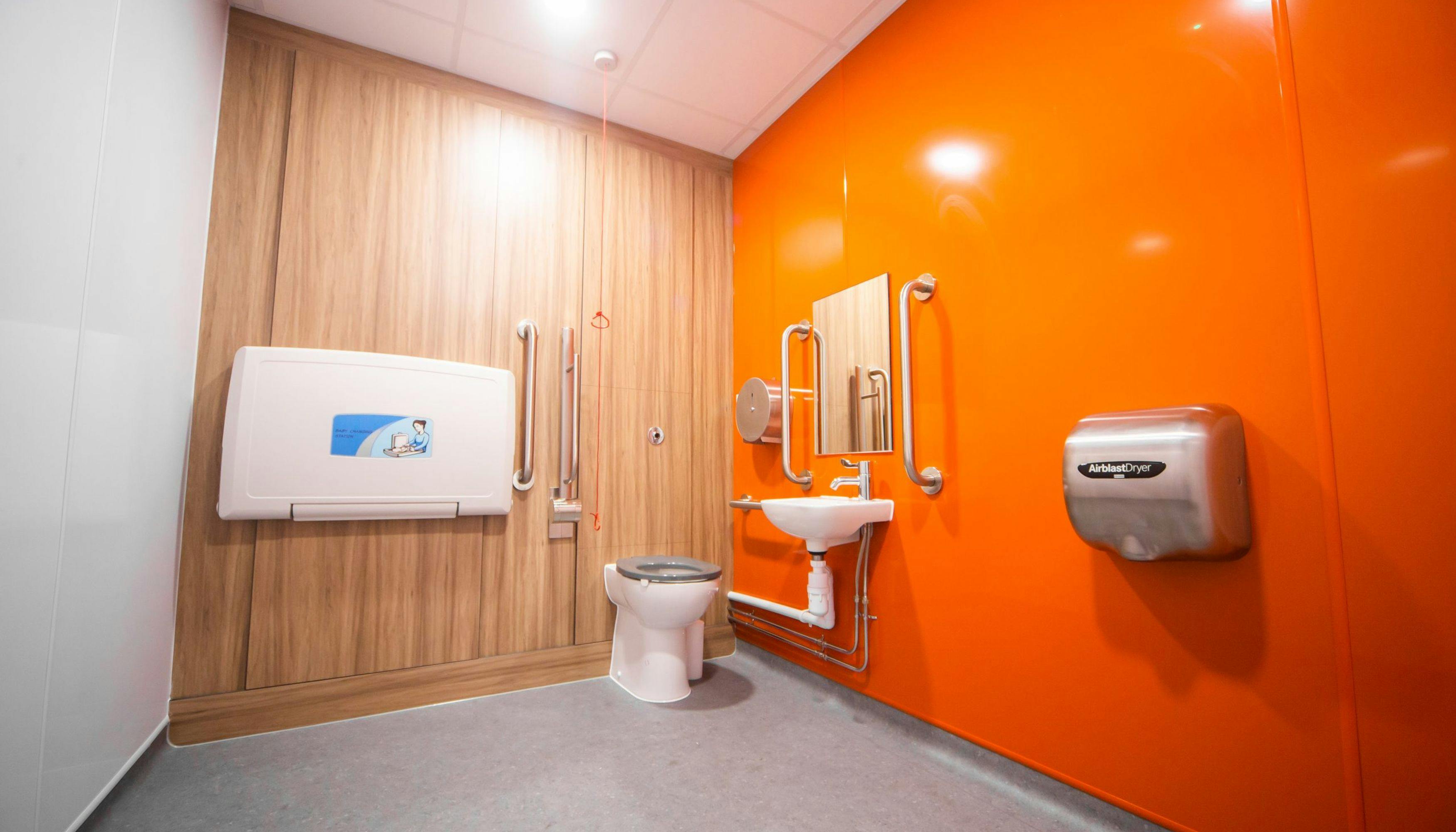
An accessible toilet is one of the most important facilities you can offer. Under the Equality Act 2010, businesses that serve the public have a duty to make reasonable adjustments so disabled customers are not put at a disadvantage, and Approved Document M sets out the design standards for accessible WCs in buildings.
Good accessible toilet design goes beyond meeting the minimum. Think about:
- Enough turning space for wheelchair users, with a clear transfer space beside the pan
- Grab rails and drop down rails in a colour that contrasts with the wall behind them
- An emergency assistance alarm with a pull cord that reaches the floor
- Contrasting toilet seats, doors and fittings to help visually impaired users
- Lever or sensor taps that are easy to use with limited grip
- Clear, inclusive signage that recognises hidden disabilities as well as visible ones
If you are unsure where your current facilities stand, our guide to disabled toilet regulations explains the key requirements. You may also find it helpful to read about the difference between a disabled or accessible toilet and which term best describes the facility your customers need.
2. Go touch-free to boost hygiene

Hygiene is still front of mind for most customers. Every surface a visitor has to touch is a potential point of cross contamination, so reducing contact points is one of the simplest ways to make your washroom feel cleaner.
Popular touch-free upgrades include:
- Sensor operated taps and soap dispensers
- Infrared or push plate flushes
- Automatic or high speed hand dryers
- Hands-free sanitary bins
- Doorless entrances or maze style layouts where space allows
Sensor taps also help to cut water waste, as they shut off automatically once hands are removed. Take a look at our overview of the different types of bathroom taps to see which options suit a busy customer washroom.
3. Upgrade your toilet cubicles for privacy

Flimsy partitions with large gaps at the top and bottom are one of the most common complaints about commercial toilets. Customers increasingly expect privacy, and modern cubicle systems make that easy to deliver.
Consider upgrading to:
- Full height or floor to ceiling cubicles for a more private, enclosed feel
- Robust door locks with clear engaged indicators, so customers are never caught out
- Moisture resistant compact laminate panels that stand up to heavy use and regular cleaning
- Coat hooks and shelves inside each cubicle for bags and belongings
Our made to measure toilet cubicles are designed around your space and footfall, and our guide to the best toilet lock systems for a cubicle door covers the options in more detail.
4. Improve ventilation and lighting

Poor ventilation leads to lingering odours, condensation and mould, all of which make a washroom feel neglected no matter how often it is cleaned. A properly sized extraction system keeps the air fresh and protects your finishes for longer. If you want to understand how extraction works in practice, read our article on how a bathroom extractor fan works.
Lighting matters just as much. Swapping old fluorescent tubes for LED lighting reduces energy use and creates a brighter, more welcoming space. Motion sensor lighting is a smart choice for customer toilets that are not in constant use, and warm, well positioned lighting around mirrors makes a noticeable difference to how customers feel.
5. Choose durable, easy clean materials

Customer toilets take a lot of wear, so the materials you choose need to look good and last. Grout lines, exposed pipework and porous surfaces trap dirt and make cleaning harder.
When planning an upgrade, look for:
- Wall cladding or large format panels with fewer joints to collect grime
- Slip-resistant flooring that is easy to mop and safe when wet
- Wall hung toilets and vanity units that leave the floor clear for cleaning
- Concealed pipework and cisterns, which also reduce the risk of tampering
Pre plumbed IPS units are a great example. They hide all plumbing behind a neat panel while still giving maintenance teams quick access when they need it.
6. Think about every type of customer

The best customer washrooms are designed with everyone in mind. Look at who actually visits your premises and ask whether your facilities meet their needs.
Simple improvements could include:
- Baby changing facilities that are accessible to all parents, not just in the women's toilets. Read more about whether it is a requirement to supply baby changing facilities
- Sanitary bins in every cubicle, including accessible and men's toilets
- Universal or gender neutral cubicles alongside separate male and female facilities
- Mirrors and hand dryers at a range of heights
- Clear wayfinding signage so customers can find the toilets without having to ask
Small touches like these show customers that your business is welcoming to all.
7. Invest in a new washroom with Inspired Washrooms
Sometimes quick fixes are not enough. If your customer toilets are dated, failing to meet accessibility standards or regularly drawing complaints, a full refurbishment is often the most cost effective long term solution. Rather than patching up individual problems, a new washroom lets you bring every improvement on this list together in one well planned space.
At Inspired Washrooms, we deliver a complete turnkey service, from washroom design through to installation.
Every commercial washroom refurbishment is assigned a dedicated project manager, so you have one point of contact from start to finish. Your work is carried out by the same multi skilled fitting team throughout, and we use commercial grade products built to last for years.
We also specialise in accessible toilet refurbishment, helping businesses create accessible facilities that are compliant, practical and designed to look good.
Customer Toilets FAQs

Do businesses have to provide customer toilets?
It depends on the type of business. Venues where customers eat or drink on the premises, such as restaurants and pubs, are usually expected to provide toilets, often as a condition of licensing or planning. Our guide on whether cafés have to provide toilet facilities explains this in more detail.
Do I need an accessible toilet for customers?
If you provide toilets for customers, you should consider how disabled customers will access them. The Equality Act 2010 requires businesses to make reasonable adjustments, and new or refurbished facilities are expected to follow the accessible WC guidance set out in Approved Document M.
How often should customer toilets be refurbished?
Most commercial washrooms benefit from a full refurbishment every 10 to 15 years, depending on footfall and the quality of the original fit out. Signs it is time to upgrade include damaged cubicles, persistent odours, outdated fittings and facilities that no longer meet accessibility standards.
How long does a customer toilet refurbishment take?
Timescales vary with the size and complexity of the project, but many smaller customer washroom refurbishments can be completed within a few weeks. We can plan works around your opening hours to keep disruption to a minimum.
Ready to improve your customer toilets?
Give your customers a washroom experience that reflects the quality of your business.
Based in Nottingham, near the M1, we work with businesses across the Midlands and the rest of the UK. Browse our case studies to see recent projects.
Or, contact Inspired Washrooms today for a free, no obligation quote on your new customer toilets.